


Article Index
Salo
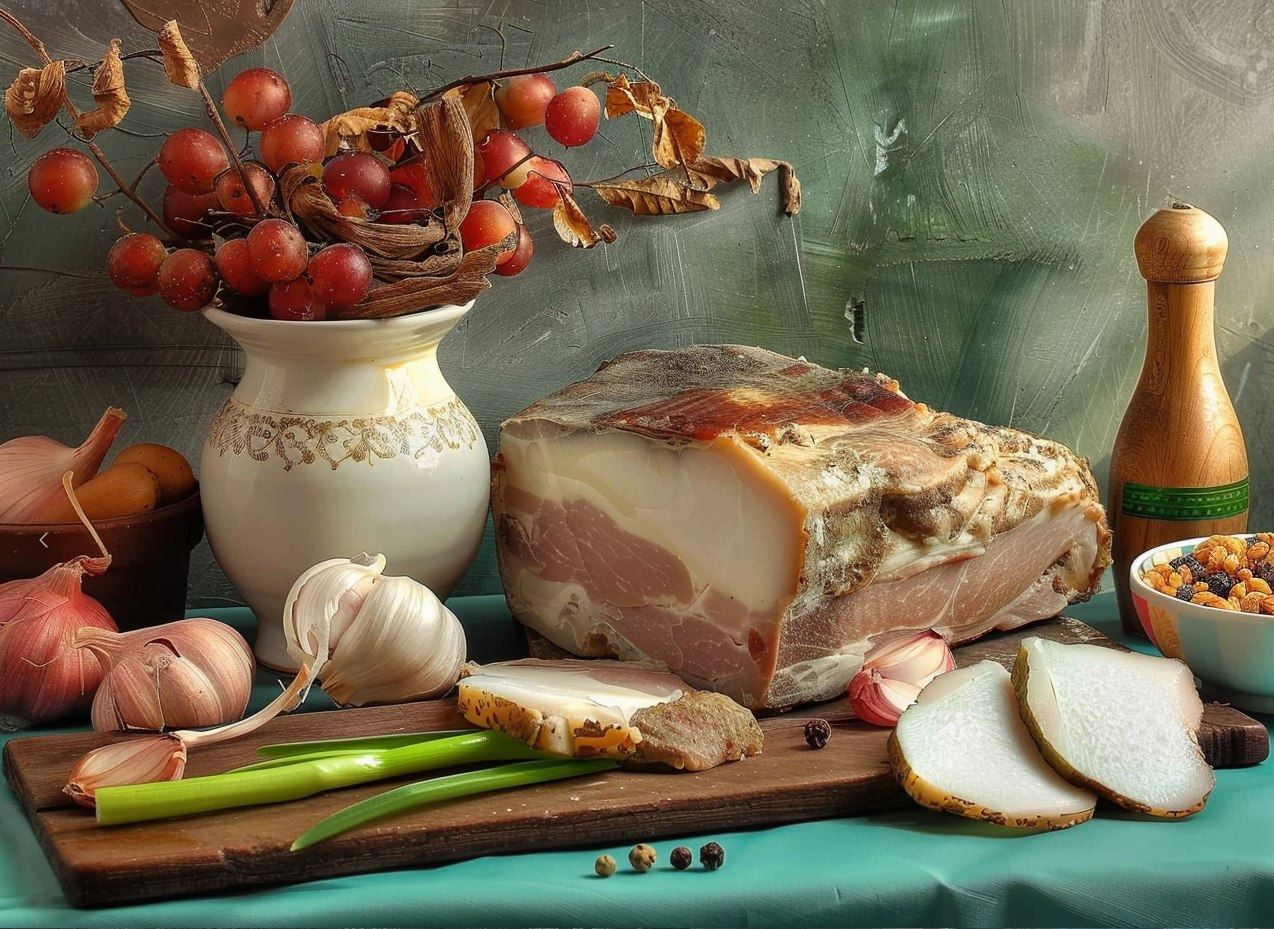
Perhaps the most quintessential Ukrainian food, salo is cured, salted pork fatback. This simple yet beloved delicacy has been a dietary staple for Ukrainians for centuries. Traditionally, salo was produced by curing thick slabs of pork fat, often with garlic, salt, and spices. The resulting product has a distinct savory-sweet flavor and a firm, spreadable texture.
Salo's history in Ukraine dates back to the 16th century, when pork was a readily available and economical source of calories and fat. As an agricultural society, Ukrainians learned to preserve pork products like salo to sustain themselves through long, harsh winters. Salo became an integral part of the national cuisine, featuring in countless traditional dishes and even taking on symbolic significance.
In Ukrainian folklore, salo is seen as a symbol of prosperity, with the saying "a family is rich if they have salo" reflecting its importance. Salo was also believed to have medicinal properties, used to treat ailments ranging from colds to rheumatism. Today, salo remains a beloved Ukrainian comfort food, enjoyed on its own, spread on bread, or incorporated into savory recipes.
The quality of salo is largely determined by the breed of pigs used and the curing process. Traditionally, Ukrainians raised their own pigs, feeding them a varied diet that included grains, vegetables, and even acorns. This resulted in salo with a rich, complex flavor profile. While industrially produced salo is available, many Ukrainians still make their own salo at home using time-honored methods.