


Lyubov Mykhailivna Panchenko was a remarkable Ukrainian artist and fashion designer whose creative legacy is deeply intertwined with the cultural revival of Ukraine during the mid-20th century. Born on February 2, 1938, in the town of Bucha near Kyiv, she emerged as a vibrant figure within the group of artists known as the “Sixtiers,” who played a crucial role in restoring and preserving Ukrainian cultural identity during the Khrushchev Thaw – a period of relative liberalization in the Soviet Union.
Panchenko’s artistic journey began in the late 1950s when she graduated from the Kyiv College of Applied Arts, specializing in embroidery. This traditional craft would become a cornerstone of her work, blending folk motifs with contemporary artistic expression. Alongside her embroidery, she developed a passion for linocut printmaking, expanding her artistic repertoire and deepening her engagement with graphic arts. In 1968, she further honed her skills by enrolling in the evening program at the Faculty of Graphics at the Ukrainian Polytechnic Institute named after Ivan Fedorov.
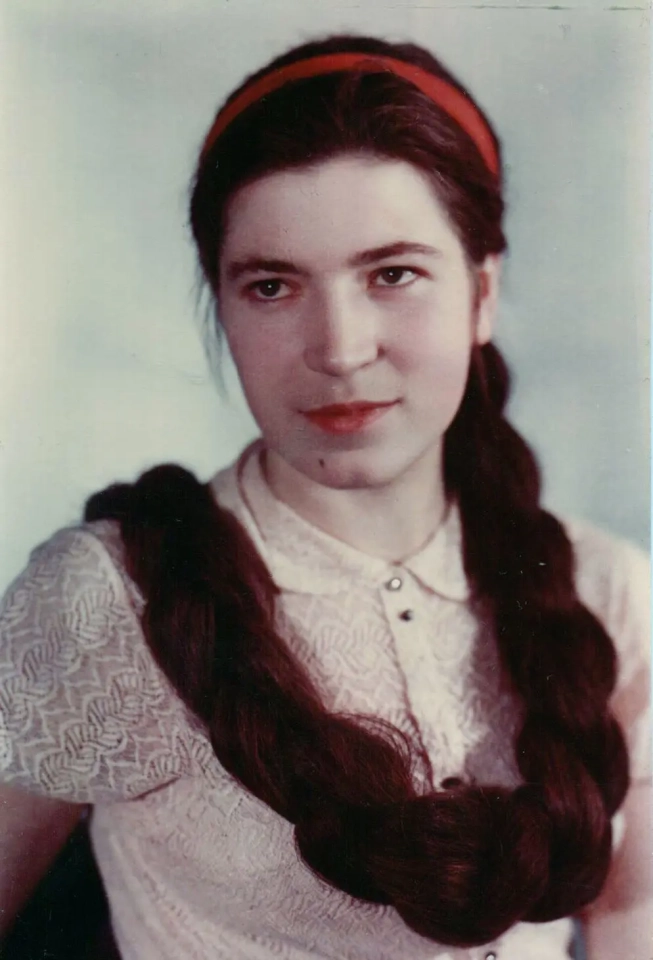
Throughout the 1960s, Panchenko was an active participant in Kyiv’s creative circles, including the Club of Creative Youth «Suchasnyk» («Contemporary») and the literary section «Brama». These communities fostered intellectual exchange and nurtured a generation of artists committed to Ukrainian cultural renewal. Professionally, she worked as a fashion designer at the Project-Design and Technological Institute and the Republican House of Models, where her talent flourished. During this period, she produced a rich body of work including watercolor paintings, clothing designs, embroidery samples, graphic book illustrations, and canvases. Many of her embroidery patterns were published in the magazine «Soviet Woman», showcasing her ability to blend traditional Ukrainian aesthetics with modern design.
Beyond her artistic achievements, Lyubov Panchenko was a passionate advocate for Ukrainian language and culture. She dedicated herself to preserving national traditions by painting pysanky (decorated Easter eggs), embroidering traditional costumes for choirs, and reviving Christmas caroling and nativity plays in Kyiv. Her commitment extended into social activism: she raised funds to support political prisoners incarcerated for “anti-Soviet agitation and propaganda,” demonstrating courage and solidarity during a time of political repression.
Exhibitions and Recognition
Lyubov Panchenko famously said, “They work to someone else’s tune, but I work to my own,” explaining why she never joined the Union of Artists of the Ukrainian SSR. This independence came at a cost: her work was never showcased in official Soviet exhibitions, her paintings did not grace the covers of Soviet magazines, and her name remained largely unknown to the wider public during that era. Despite this marginalization, Panchenko continued to create art that was deeply personal and culturally significant, refusing to conform to the demands of the Soviet artistic establishment.
It was only decades later that Panchenko’s genius began to receive public recognition. In 2008, the National Museum of Literature of Ukraine held a major jubilee exhibition featuring over 150 of her works, including paintings, graphic art, and appliqué. The exhibition was a breakthrough moment, allowing audiences to see the full breadth of her artistic vision. The prominent writer and human rights activist Yevhen Sverstiuk praised her work, noting, “These pieces clearly bear the mark of genius. She lives in her own world and opens that world to us.” This statement captured the unique spirit of Panchenko’s art – deeply rooted in Ukrainian tradition yet unmistakably original.
In 2014, another significant exhibition titled «My World!» was presented at the Hrushevsky Museum in Kyiv. This exhibition further cemented her place as a vital figure in Ukrainian art and culture. Today, Panchenko’s works are treasured in private collections belonging to her friends and admirers, as well as in the Museum of the Sixtiers in Kyiv, which honors the generation of artists and intellectuals who challenged Soviet norms during the 1960s.
Final Years and Legacy
Tragically, Lyubov Panchenko passed away on April 30, 2022, at the age of 84. According to Anatoliy Fedoruk, the mayor of Bucha – a city hero of Ukraine – she died in a hospital after enduring a month-long hunger strike during the Russian occupation of Bucha. Despite surviving relentless persecution by the KGB during Soviet times, Panchenko suffered greatly under the recent Russian invasion. Her death marked a profound loss for Ukrainian culture and art.
She was laid to rest on May 2, 2022, at the Yablunske Cemetery in Bucha, next to her husband, Oleksiy Oliynyk, who was also an artist.
Lyubov Panchenko’s life and work have become emblematic of the struggles and resilience of Ukrainians throughout the tumultuous 20th and 21st centuries. She is one of the featured heroines in the powerful photo-documentary exhibition titled «Communism = Rashism», developed by the Archive of National Memory. This exhibition presents thirteen compelling stories of Ukrainians who suffered under both Soviet and Russian regimes. The narratives are carefully chosen to draw a poignant parallel between the crimes of communism and what is referred to as “Rashism” (a term combining "Russia" and "fascism," used to describe aggressive Russian nationalist ideology and authoritarian practices), highlighting the continuity of oppression faced by Ukraine across different eras.
In recognition of her profound impact on Ukrainian art and society, significant honors have been bestowed upon Lyubov Panchenko in recent years. On April 12, 2023, the city of Bucha renamed Dimitrova Street to Lyubov Panchenko Street, a symbolic act that embeds her legacy into the very fabric of Ukrainian daily life.
Further celebrating her artistic heritage, on April 15, 2025, the National Bank of Ukraine issued a commemorative coin titled “The World of Art by Couturier: Lyubov Panchenko” with a denomination of 10 hryvnias. This special coin honors her unique contributions to Ukrainian art and helps to bring her story to a wider audience, ensuring that future generations remember her creativity and resilience.