


Lutsk Castle, also known as the Lubart Castle, is one of the largest, oldest, and best-preserved castles in Ukraine. Its history can be traced back to the 10th century, when a small fortified settlement emerged on an island surrounded by the meandering Styr River. This early settlement, known as Luchesʼk, is believed to have been the creation of Volodymyr the Great, the grand prince of Kyivan Rus'.
The castle's origins as a wooden fortress can be traced to the 11th century, when it withstood several sieges, including one by the Polish King Bolesław II the Generous in 1069. Over the next two centuries, the castle's defenses were gradually strengthened, with the construction of a clay-and-sand rampart and more robust wooden fortifications.
The transformation of the Lutsk Castle into a formidable stone fortress began in the mid-14th century, under the rule of Prince Liubartas, the son-in-law of the last Galician-Volhynian prince, Andrii II. Liubartas, who initiated the construction of the Upper Castle, which was largely completed by 1430. The castle's outer bailey, known as the Okolnyk, was later reconstructed in brick, starting in 1502, in response to the growing threat of Turkish and Tatar raids.
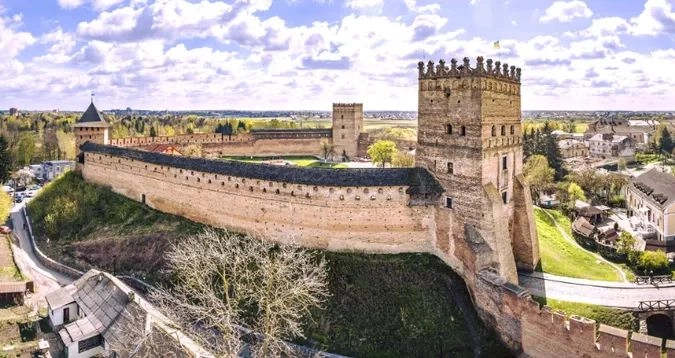
The castle's significance as one of the largest and best-preserved in Ukraine cannot be overstated. Covering an area of nearly a triangular equilateral, the castle's walls and towers, built using up to 5 million bricks, stand up to 12 meters high and 3 meters thick. The castle's architectural style is a blend of Gothic and Renaissance elements, with the towers and walls featuring intricate brickwork patterns and arched bays.
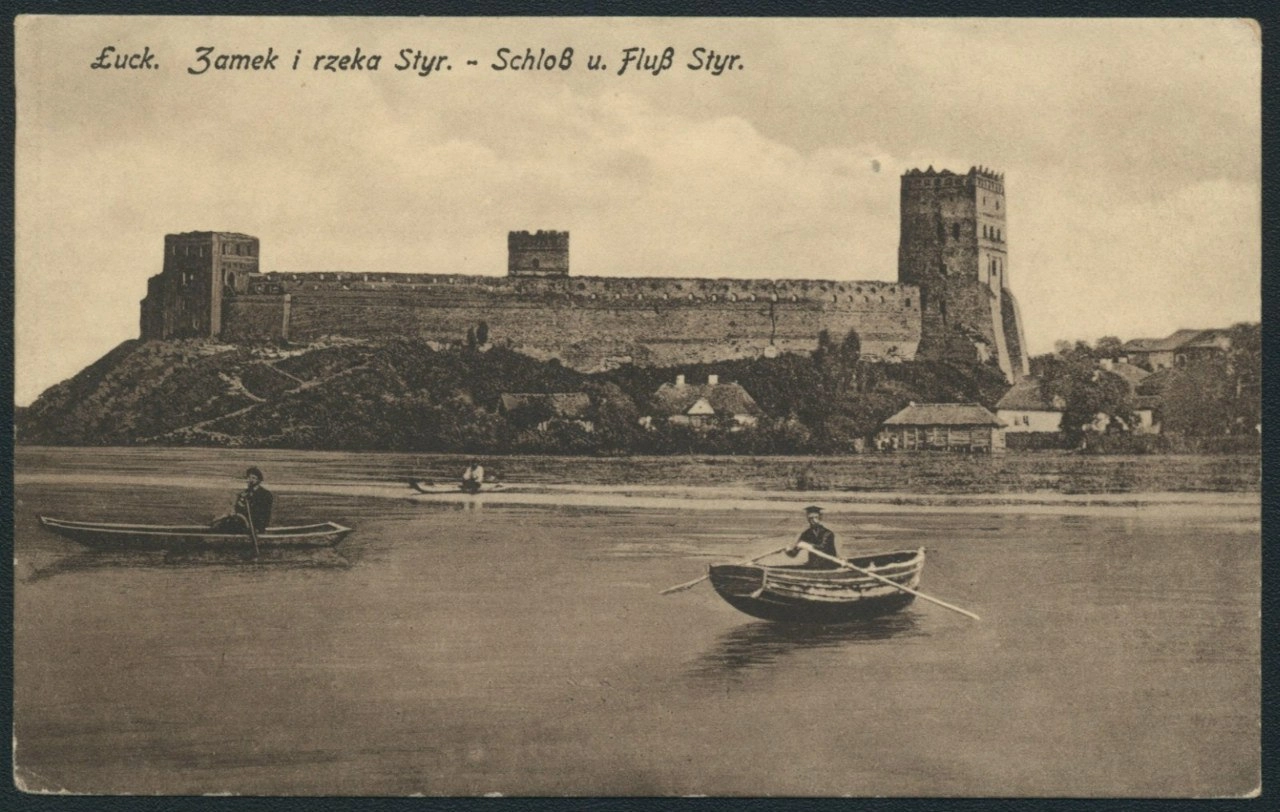
The castle's strategic location and impressive fortifications made it a crucial center of power in the region. It served as the residence of the Grand Duke of Lithuania, and later, after the Union of Lublin in 1569, as the seat of the royal authority in the Volhynian Voivodeship. The castle was the site of important political, administrative, judicial, and religious functions, including the hosting of a European monarchs' summit in 1429, which aimed to resolve political and economic issues in Central and Eastern Europe and discuss the possible coronation of Vytautas the Great.
The castle's significance extended beyond its military and political roles. It was also a cultural and religious center, with both the Latin and Orthodox cathedrals located within its walls. The castle's courts and tribunals played a crucial role in the regional judicial system, with the Lutsk Tribunal serving as the highest appellate court for the Volhynian, Bratslav, and Kyiv Voivodeships.

Despite the castle's decline in the 18th and 19th centuries, when it lost its administrative and military functions, it remained an iconic symbol of Lutsk and a source of inspiration for artists and writers. The castle's majestic ruins captivated the imagination of figures like the Polish writer Józef Ignacy Kraszewski, who described it as "the most magnificent, the most beautiful, the most eloquent" of all the castles he had seen.
Today, the Lutsk Castle, or the Lubart Castle, stands as a testament to the rich history and architectural heritage of Ukraine. Meticulously restored and maintained, the castle is a popular tourist destination, offering visitors a glimpse into the grandeur of the past and the resilience of a fortress that has withstood the test of time.
Verkhni (Upper) Castle
The Verkhni Castle's triangular plan was not merely a practical consideration but also a reflection of the architectural trends of the time. This layout was commonly seen in castles and fortresses across Europe, particularly in regions that were influenced by the Gothic style of architecture. The use of this design allowed for a more efficient distribution of defensive resources, with each tower and wall segment playing a crucial role in the overall defensive strategy.
The defensive features of the castle were meticulously designed to maximize its protective capabilities. The walls were topped with battlements, providing a secure platform for archers and soldiers to defend the fortress. Strategically placed loopholes, or narrow openings in the walls, allowed for the effective use of ranged weapons, such as bows and crossbows, against approaching enemies.
One of the most impressive defensive features of the Verkhni Castle is the presence of machicolations. These are projecting, corbelled structures that extend beyond the wall's face, allowing defenders to drop objects or pour hot liquids onto attackers below.

The combination of these architectural elements created a formidable defensive system that could withstand prolonged sieges and attacks. The thick walls, towers, and specialized features worked in harmony to provide a comprehensive layer of protection for the castle's inhabitants and the surrounding region.
The castle's three main towers – the Entrance Tower, the Styrova Tower, and the Vladycha Tower – each possess their own unique architectural features and historical significance.
The Prince's Palace: A Seat of Power and Grandeur
The Prince's Palace, once a grand symbol of power and political activity, was situated within the Upper Castle of Lutsk. In 1429, this notable structure hosted a significant assembly of European monarchs, aimed at addressing the political and economic challenges facing Central-Eastern Europe, as well as discussing the coronation of Vytautas the Great.
This former royal residence served as a hub for the Grand Dukes of Lithuania, reflecting Lutsk's strategic importance within the Lithuanian-Rus' state. Architectural records reveal that the palace underwent several phases of construction and renovation, particularly during the early 15th century under Vytautas's reign.

The interior was characterized by opulence and functionality, featuring grand halls, ornate chambers, and private quarters designed for the ruling elite. Visitors would have been captivated by the intricate murals, tapestries, and fine artworks that adorned its walls, creating an atmosphere of refined elegance. A notable aspect of the palace was its chapel, where the ruling family and their guests gathered for religious observances.
However, despite its historical significance and grandeur, the Prince's Palace no longer exists today, leaving behind only echoes of its former glory and the pivotal events that once unfolded within its walls.
Dungeons and Prisons: The Darker Aspects of the Castle's History
Beneath the grandeur of the Lutsk Castle upper levels lay a more sinister aspect of its history – the dungeons and prisons located in the tower basements. These subterranean spaces were designed to house the castle's most notorious and dangerous prisoners, serving as a stark reminder of the harsh realities of medieval justice.
The dungeons were notoriously grim, with damp, dark, and cramped conditions that were intended to break the spirit of the incarcerated. Prisoners were often subjected to harsh interrogation techniques, including torture, in an effort to extract information or confessions.
One of the most infamous features of the castle's prisons was the presence of a dedicated torture chamber, where the castle's executioner would carry out the grim task of extracting information from unwilling subjects. The chamber's walls were said to be stained with the blood of countless victims, a testament to the brutality of the era.
The Okolnyi (Outer) Castle
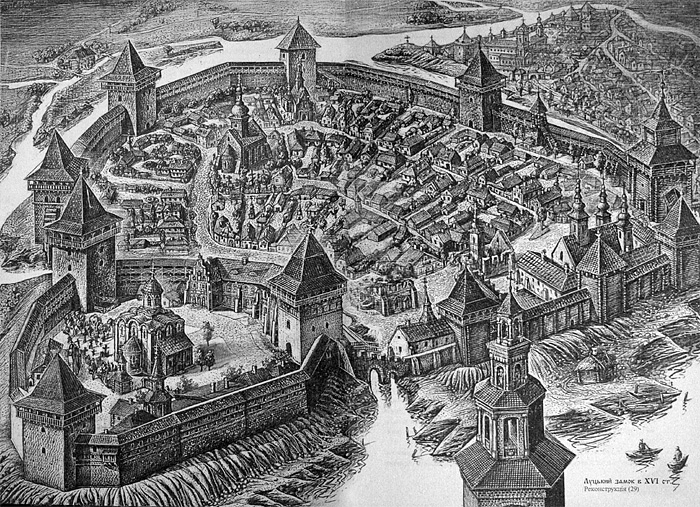
The outer castle covered an area of approximately 6 hectares and was surrounded by a partially brick wall and a partially wooden one, constructed from log cabins - totaling 69 in number. The wall of the outer castle began at the Styr Tower of the Upper Castle and ended at the Gate Tower of the Upper Castle. It featured eight towers: four wooden and four stone. Today, only one stone tower and fragments of the walls remain.
The Okolnyi Castle's defensive system was initially constructed of wood, but in the early 16th century, a major reconstruction effort was undertaken to replace the wooden structures with brick. This was a response to the growing threat of Turkish and Tatar raids, which had become a significant concern for the region.
The reconstruction work began in 1502, with the production of 240,000 bricks and the expenditure of 215 kops (an old Lithuanian currency unit) on hired laborers. Over the following years, additional funds were allocated to continue the reconstruction, as the existing wooden defenses were deemed insufficient to withstand the attacks.
The result of this effort was a formidable brick wall system, with a thickness ranging from 1.7 to 2 meters. The brickwork was laid in a Gothic ornamental pattern, adding an aesthetic element to the defensive structures. However, the available supply of bricks was not sufficient to complete the entire Okolnyi Castle, and some sections remained in their original wooden form.

Among the notable towers of the Okolnyi Castle were the Chortoriyski Tower, the Svynyuska Tower, the Tower of Ivan the Treasurer, and several others belonging to various princely families. These towers were constructed with brick and topped with the same type of gabled roofs as the towers of the Verkhniyi Castle, creating a harmonious architectural ensemble.
The Okolnyi Castle was not solely a military stronghold; it also housed important religious and administrative structures. The most significant of these was the St. Trinity Catholic Cathedral, which was constructed in the early 16th century. This cathedral served as the seat of the Latin-rite bishop of Lutsk, and it played a crucial role in the religious life of the city.

In the mid-17th century, the Okolnyi Castle also became home to the Jesuit Collegium and Church. The Jesuits, a Catholic religious order known for their educational and missionary work, established their presence in Lutsk and constructed a substantial complex within the castle walls. This included a college building and a church, which were integrated into the existing defensive structures.
Transformation into a Museum Complex
The Lutsk Castle, once a mighty fortress, has undergone a remarkable transformation into a vibrant museum complex that showcases the rich history and cultural heritage of Lutsk and Ukraine. This architectural gem, dating back to the 14th century, has been meticulously preserved and repurposed to serve as a hub for education, exploration, and cultural appreciation.
The castle's transition into a museum complex began in the 1980s, when the Lutsk Historical and Cultural Reserve "Old Lutsk" was established. This initiative aimed to safeguard the oldest part of the city, including the Lutsk Castle, and to promote its historical significance. Since then, the castle has become a central focus of the reserve, with various exhibitions and displays that invite visitors to immerse themselves in the rich tapestry of the region's past.
The preservation and restoration of the Lutsk Castle have been an ongoing endeavor, marked by a series of meticulous efforts and remarkable archaeological discoveries. Over the years, the castle has undergone extensive conservation work, with the goal of maintaining its structural integrity and restoring its original grandeur.

One of the most significant restoration projects took place in the 1960s and 1970s, when the castle's towers, walls, and interiors were reinforced and reconstructed under the guidance of renowned architects and historians.
Alongside these restoration efforts, the castle has been the site of extensive archaeological excavations, which have unearthed a wealth of artifacts and historical treasures. Archaeologists have uncovered the remains of the castle's original foundations, as well as the foundations of the Prince's Palace and the Cathedral of St. John the Theologian. These discoveries have provided invaluable information about the castle's construction, layout, and the lives of its former inhabitants.
The most recent archaeological find, in 2020, was the discovery of previously unknown underground chambers beneath the Chortoryski Tower of the Outer Castle. This remarkable discovery has not only expanded our understanding of the castle's defensive systems but has also sparked renewed interest in exploring the castle's hidden depths.
Cultural Events and Festivals Hosted within the Castle
The Lutsk Castle has become a vibrant cultural hub, hosting a diverse array of events and festivals that celebrate the region's rich heritage and artistic traditions. From music and theater performances to historical reenactments and craft fairs, the castle's courtyard has become a stage for the community to come together and showcase their talents.
One of the most anticipated events is the annual "Sword of Lutsk Castle" festival, which transports visitors back to the medieval era with thrilling jousting tournaments, sword-fighting demonstrations, and immersive historical experiences. The castle also plays host to the "Blessing of Volyn" bell-ringing festival, where the melodic sounds of ancient bells reverberate through the castle's walls, captivating audiences.

The Lutsk Castle has long been a symbol of Lutsk and a source of immense pride for the Ukrainian people. Its towering walls, intricate architectural details, and rich history have made it an iconic landmark that is deeply woven into the cultural fabric of the region.
Interesting facts about Lutsk CastleOne of Ukraine’s Wonders
One of Ukraine’s Wonders
In a popular vote for the "Seven Wonders of Ukraine," Lutsk Castle claimed the top spot in 2011. This recognition underscores its status as a vital tourist attraction and cultural monument, drawing visitors from across the nation and beyond to explore its rich history.
The Entrance Tower on a Banknote
The entrance tower of the Lutsk Castle graces the reverse side of the 200 hryvnia banknote, highlighting the castle's significance in Ukraine's cultural and historical landscape. Banknotes often feature symbols that represent national heritage, and this particular choice reflects the castle's enduring legacy.
A Unique Bell
Within the castle resides a remarkable bell from 1647, which managed to escape the fate of its counterparts that were melted down into cannons during the National Liberation War. This bell is a contemporary of Bohdan Khmelnytsky and showcases a unique craftsmanship that adds to its allure.
The Castle Archive
The renowned castle archive has created and preserved over a million documents chronicling Ukraine's history. This makes Lutsk Castle an essential repository for those interested in delving into the nation’s past and cultural evolution.
Olga Kosach's Autograph
Lutsk Castle also boasts an intriguing piece of personal history: an autograph etched into one of its bricks by Olha Kosach, sister of the famous poetess Lesya Ukrainka. This small yet meaningful detail adds a personal touch to the castle’s rich narrative, connecting visitors to its storied past.