

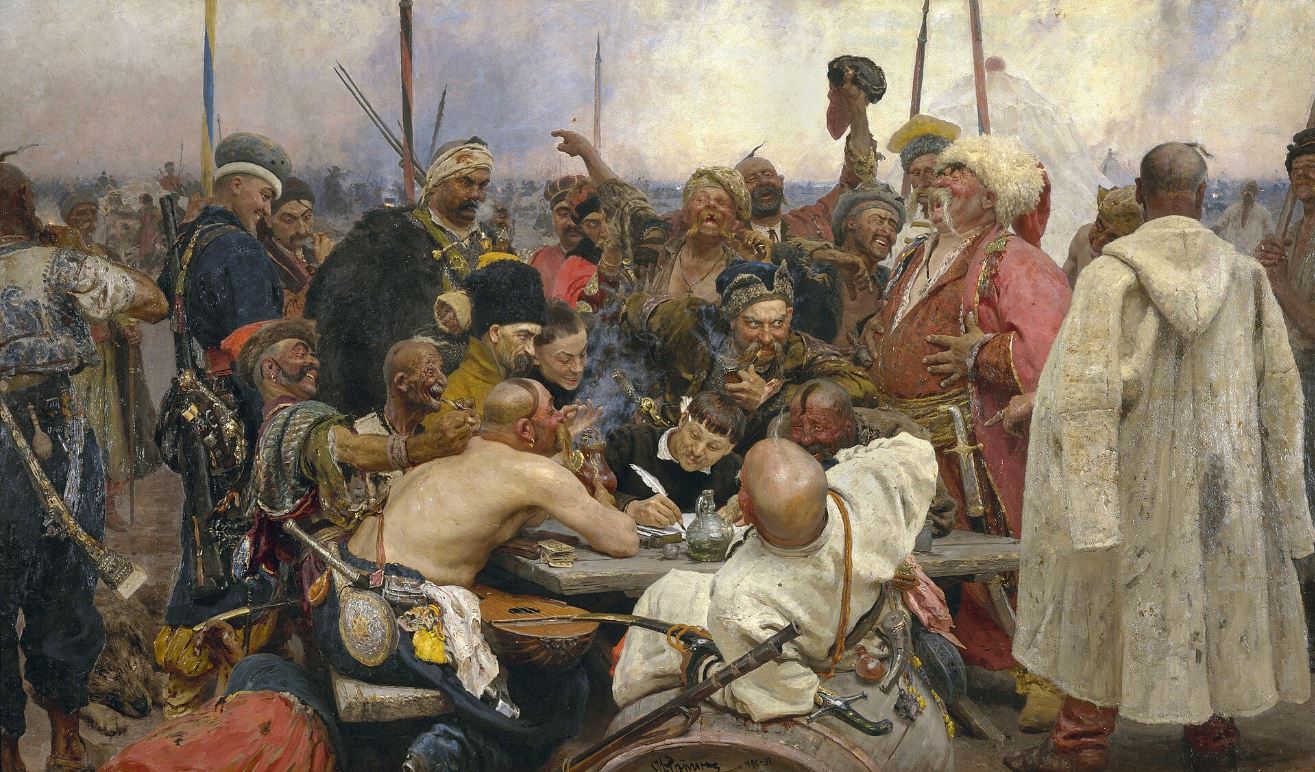
The iconic painting by Ilya Repin, "Zaporozhian Cossacks Writing a Letter to the Turkish Sultan" has captivated art enthusiasts and historians alike for over a century. Depicting a group of Cossack warriors engaged in a defiant and humorous response to the Ottoman Sultan's demand for their surrender, the painting has become a cultural touchstone, embodying the indomitable spirit of the Ukrainian people.
Repin's masterpiece, completed in 1891, has cemented its place as one of the most renowned works of art, showcasing the Cossacks' unwavering resistance against the expansionist ambitions of the Ottoman Empire.
The Historical Context
The relationship between the Zaporozhian Cossacks and the Ottoman Empire was marked by a long history of conflict and confrontation. The Cossacks, a semi-autonomous military community that had established the Zaporozhian Sich on the banks of the Dnipro River, were known for their fierce independence and their relentless raids against the Ottomans and their Crimean Tatar allies.
In the 17th century, the Cossacks were a formidable force to be reckoned with, often serving as a buffer between the expanding Ottoman Empire and the Polish-Lithuanian Commonwealth. The Ottomans, seeking to consolidate their control over the Black Sea region, frequently attempted to subjugate the Cossacks and bring them under their sway.

One such attempt occurred in the late 1670s, when the Ottoman Sultan Mehmed IV (also known as Mehmed the Hunter) sent a letter to the Zaporozhian Cossacks, demanding their unconditional surrender. The Sultan, known for his grandiose and bombastic language, sought to assert his dominance over the Cossacks, who had long been a thorn in the side of the Ottomans.
The Cossacks, led by the renowned Koshovy Otaman (Cossack military leader) Ivan Sirko, responded to the Sultan's ultimatum with a letter that has become legendary for its defiant and irreverent tone. This letter, which has been the subject of much scholarly debate and interpretation, is the centerpiece of Repin's masterpiece.
The Legend of the Letter
The origins of the "Letter of the Zaporozhian Cossacks" have been the subject of much scholarly debate and investigation. The earliest known version of the letter dates back to the late 17th or early 18th century, but the exact date and authorship of the document remain uncertain.
One of the earliest known versions of the letter was discovered in the archives of the Moscow Synodal Library in the late 19th century. This version, which was likely based on a Polish original, was published in the 1890s by the renowned Ukrainian historian Mykhailo Hrushevsky. Hrushevsky's publication helped to bring the letter to the attention of a wider audience and sparked a renewed interest in the Cossack legacy.

The letter itself is a masterpiece of Cossack wit and defiance, with the Cossacks responding to the Sultan's grandiose claims and demands with a barrage of insults and irreverent humor. The Cossacks mock the Sultan's self-proclaimed titles, such as "the Sultan, the son of Muhammad, the brother of the sun and moon, the companion of the planets and the Pleiades, the sole arbiter of the world, the embodiment of the century, the shadow of God on earth," and proceed to unleash a torrent of scathing and profane language.
One of the most famous passages from the letter reads:
"Thou Babylonian scullion, Macedonian wheelwright, brewer of Jerusalem, goat-fucker of Alexandria, swineherd of Greater and Lesser Egypt, Armenian pig, Podolian thief, catamite of Tartary, hangman of Kamyanets, and fool of all the world and the underworld, an idiot before God, grandson of the Serpent, and the crick in our dick. Pig's snout, mare's arse, slaughterhouse cur, unchristened brow, may the devil shit into thy mouth, so all thy teeth fall out, and may thy horse break thy neck!"
The letter goes on to defiantly declare that the Cossacks have no fear of the Sultan's army and that they will continue to fight him "by land and by sea." The letter concludes with the Cossacks inviting the Sultan to "kiss our arse" and signing it with the name of their koshevoi ataman, Ivan Sirko.
The text of the letter, with its vivid and colorful language, has become a source of fascination for scholars and historians, who have studied its origins, evolution, and cultural significance. While the authenticity of the letter has been debated over the years, with some scholars arguing that it is a later fabrication, the legend of the Cossacks' defiant response to the Ottoman Sultan has become a cherished part of Ukrainian cultural heritage.
Repin's painting, which depicts the Cossacks in the midst of composing their letter, has become a visual representation of this legendary moment, capturing the spirit of the Cossacks' unwavering resistance to the Ottoman Empire's demands. The painting, with its dynamic composition and attention to detail, has become an iconic work of art that continues to inspire and captivate audiences around the world.

The letter itself, with its mix of profanity, humor, and defiance, has become a symbol of the Cossacks' fierce independence and their refusal to be subjugated by the Ottoman Empire. The Cossacks' willingness to mock and insult the Sultan, the most powerful ruler in the Islamic world at the time, is a testament to their bravery and their unwavering commitment to their own cultural and political autonomy.
In the centuries since the letter was first composed, it has become a source of pride and inspiration for Ukrainians, who see in the Cossacks' defiant response a reflection of their own national spirit and their refusal to be dominated by foreign powers. The letter has been translated into numerous languages and has been the subject of countless scholarly and artistic interpretations, cementing its status as a cultural touchstone that continues to resonate with audiences around the world.
Ultimately, the legend of the "Letter of the Zaporozhian Cossacks" and Repin's iconic painting are a testament to the enduring power of the human spirit in the face of adversity. The Cossacks' refusal to submit to the Sultan's demands, and their willingness to mock and insult him in the most colorful and defiant terms, is a powerful reminder of the importance of standing up for one's beliefs and refusing to be cowed by the might of those in power. The legend of the letter, and the painting that immortalizes it, continue to inspire and captivate audiences, reminding us of the power of resistance and the enduring spirit of the Zaporozhian Cossacks.