

Ukrainian traditional attire, having undergone a lengthy evolution, showcases remarkable diversity with distinct characteristics. Each region and even individual villages exhibit unique clothing traits.
By the end of the nineteenth century, Polissya still preserved numerous ancient characteristics within its swamps and dense forests, along with its traditional lifestyle and attire. Despite sharing economic and geographical similarities, there exist distinct regional variations across its expansive expanse. Notably, these variances encompass the unique traits of both left-bank and right-bank Polissya, shaped by historical circumstances, as well as the distinguishing features of southern Volyn, bordering Podillia and northwestern Prykarpattia.
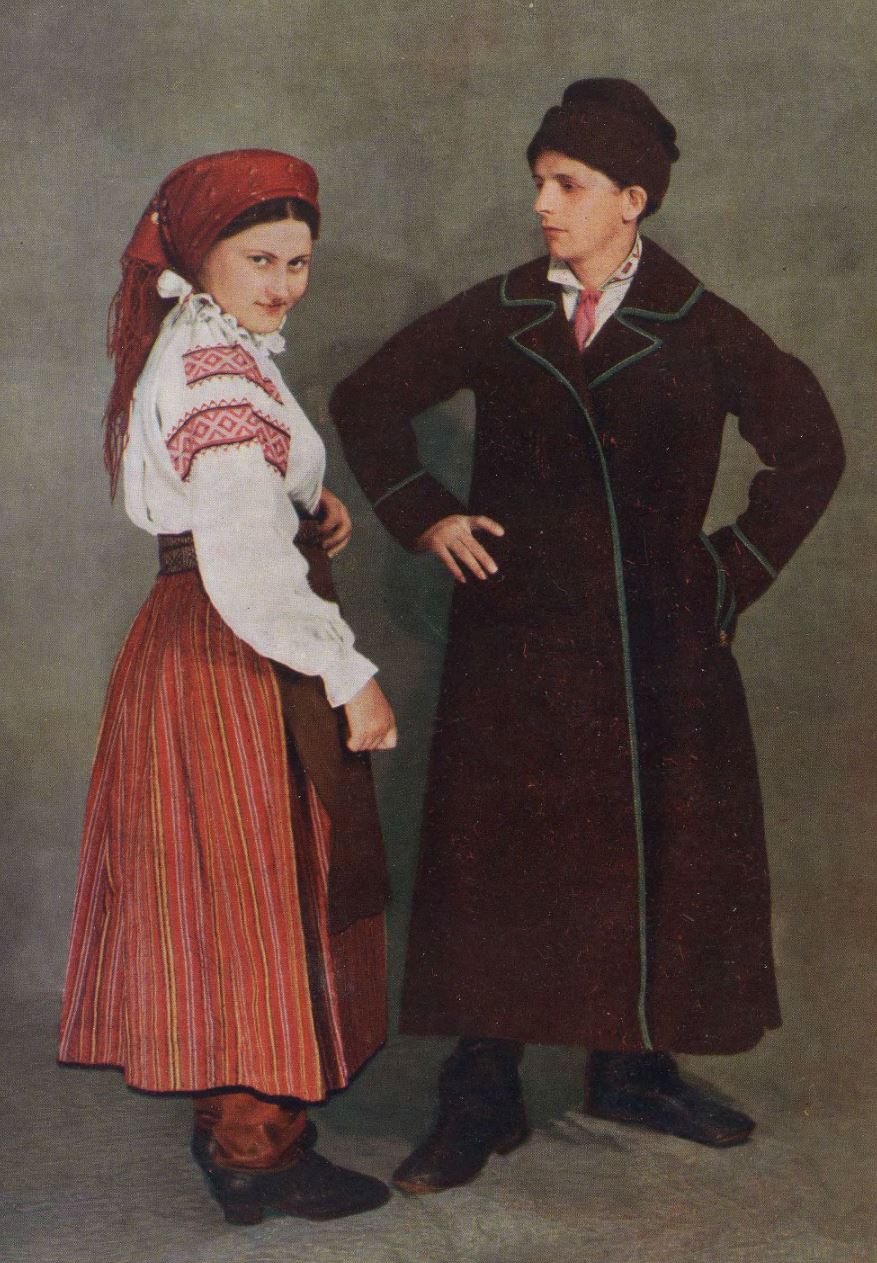
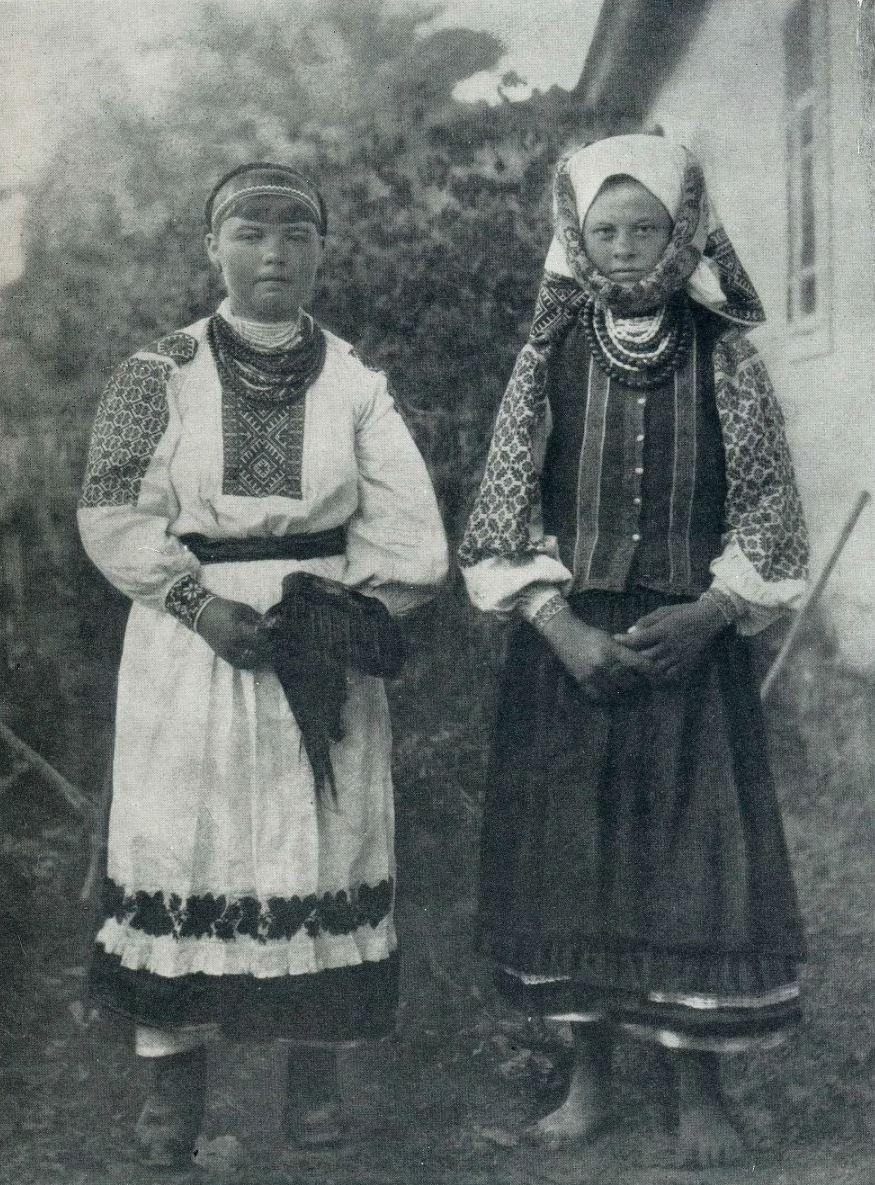
The antiquated ensemble of garments that endured in right-bank Polissya nearly until the outbreak of the First World War exhibited the following distinctive attributes. Women's blouses featuring a lined collar were crafted with inserted bands predominantly using raw or partially bleached fabric, adorned with intricate weaving patterns and a stitching style known as "zatyavanka", an embroidery technique mirroring the designs of woven motifs. The predominant hue was red, occasionally intertwined with shades of blue.
Men's shirts with arrowheads or set-in were worn over relatively narrow trousers and were cinched with a slim belt featuring a copper buckle. The shoulder covering for both women and men was a sirnyaga, a traditional garment.
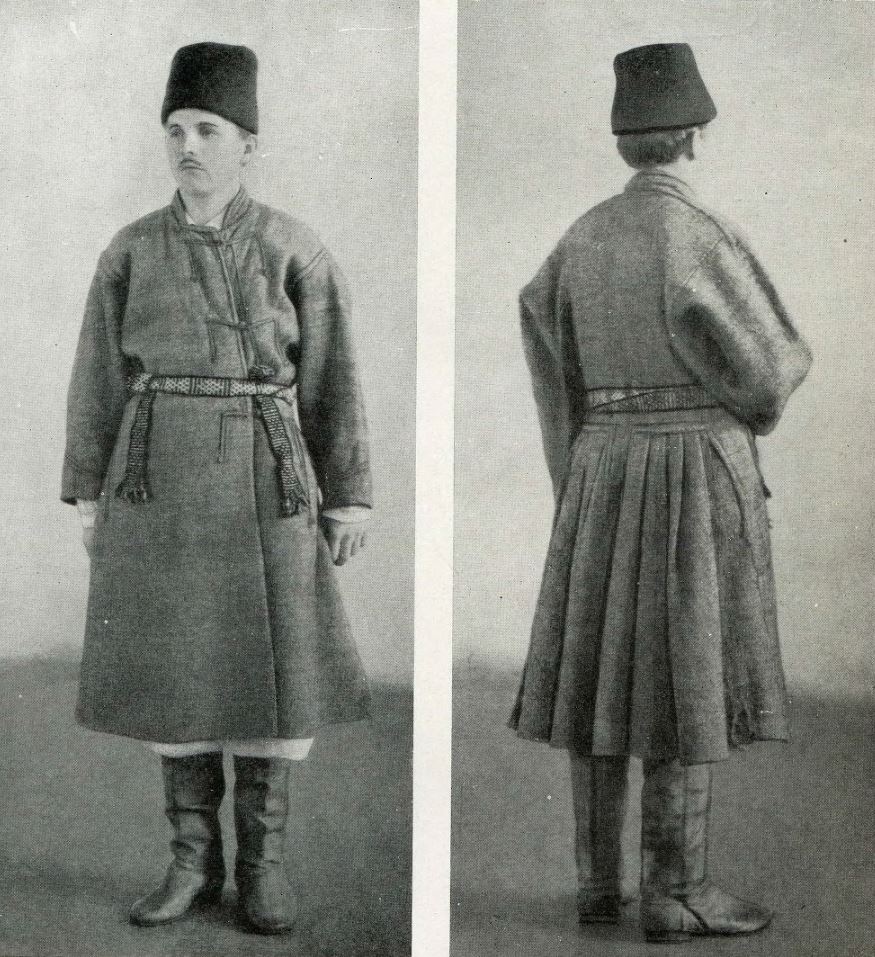
Girls' headdresses were adorned with a red woolen ribbon, while women donned a white namitka or obrus. Men sported felt yolokas or cloth quadrangular magerkn as headwear.
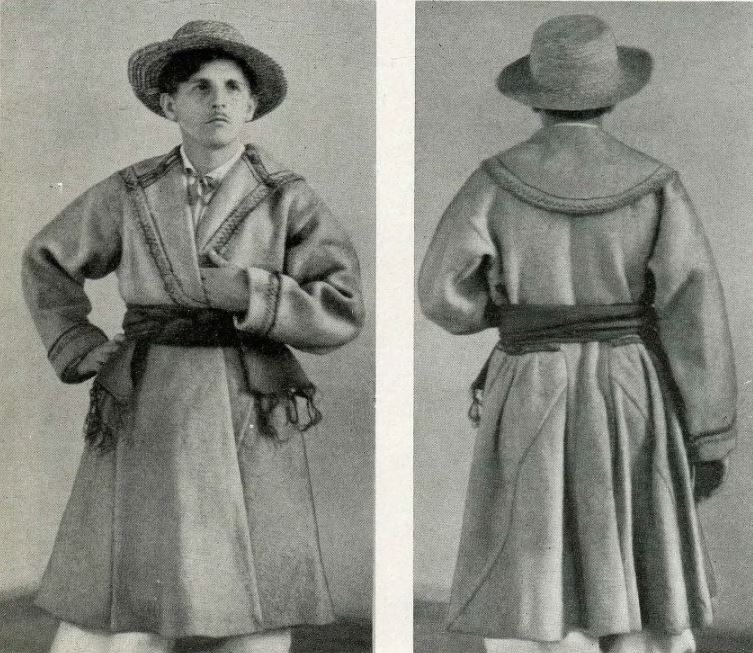
A belted plakhta garment with small checkered patterns is specific to the attire of women in left-bank Polissia. In the mid-nineteenth century, a red andarak made of homemade hair cloth, embellished with woven or embroidered colorful ornaments, was also prevalent. In the latter half of the nineteenth century, white kersetki made of homemade fabric with a transverse pocket on the right side were worn. Men also wore similar kersets, only in darker shades. Dark men's scrolls are also characteristic of left-bank Polissya.
At the turn of the twentieth century, distinctive characteristics of men's attire in Polissya and the Left Bank region started to fade away: shirt hemlines were tucked inside trousers, hats and caps were favored over nolomkips, and lychaky gave way to boots.
The embellishment of women's and men's shirts saw the rise of one-sided cross-stitch embroidery technique instead of intricate weaving and traditional Ukrainian stitches.
The northern belt of right-bank Polissya (comprising the northern parts of Kyiv and Zhytomyr regions and the wooded regions of Rivne and Volyn regions) stands out as the region where the age-old customs of folk dress have endured the longest.
The sleeves of women's shirts continue to be adorned with woven patterns using the shuttle technique, either covering the entire sleeve or featuring stripes of varying widths. Occasional simple narrow red and blue stripes traverse the entire panel of women's and men's shirts.
In the past, traditional outfits included a pair of zapatkas, intricately woven with vibrant horizontal patterns, but as time progressed into the nineteenth century, they were substituted by a crimson summer gown adorned with long multihued stripes. A decorative undershirt made of wool or linen, serving as a forerunner, is worn underneath the summer robe.
In Korostenshchyna, intricate carpet zapasky featuring a variety of elaborate geometric designs are still meticulously crafted and worn. The litnyk and stockings are accentuated with colorful woolen dots.
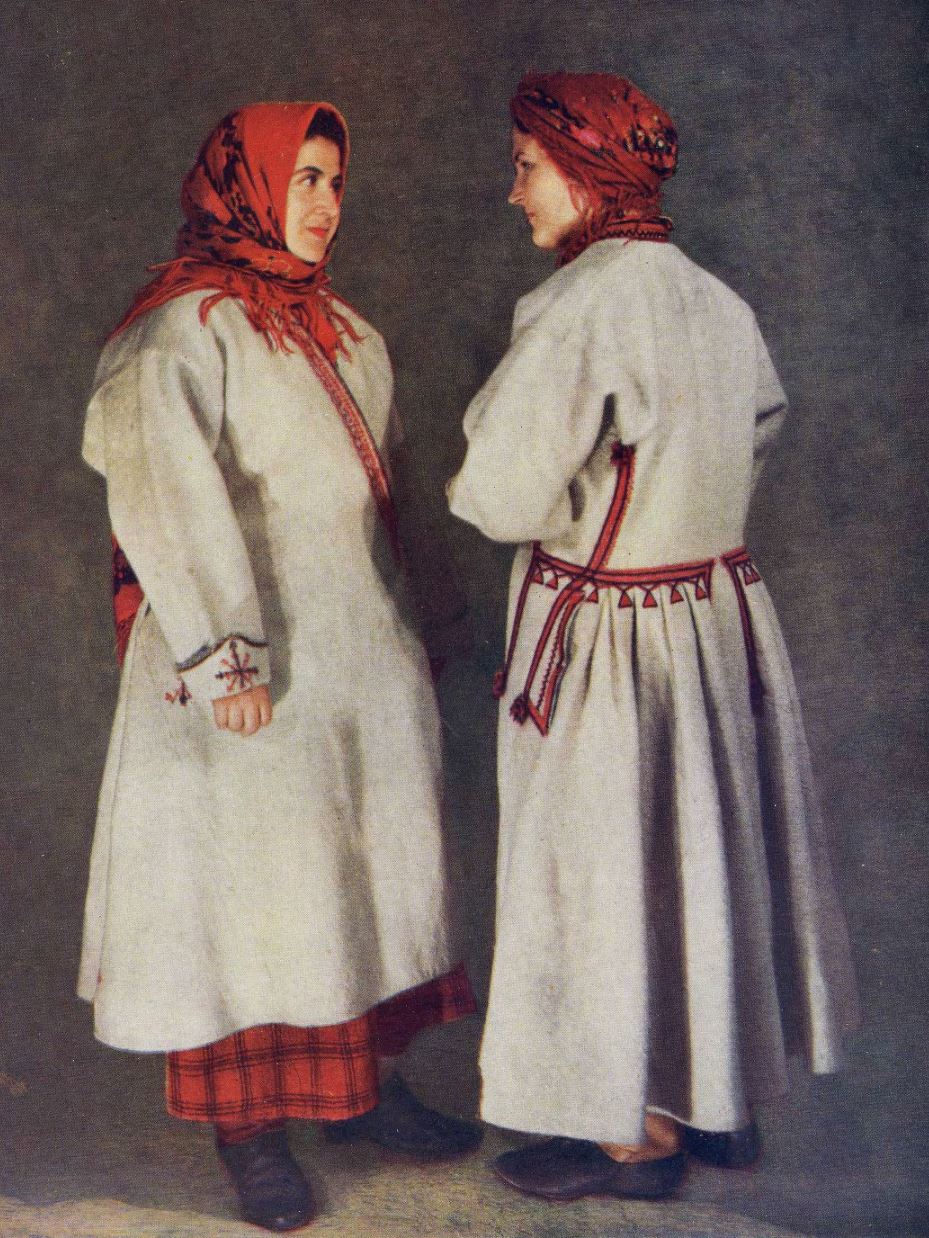
As the twentieth century dawned, voluminous skirts made of factory-made fabrics, predominantly red in color, embellished with multiple horizontal stripes of varying hues, gained popularity in place of lyotniks.
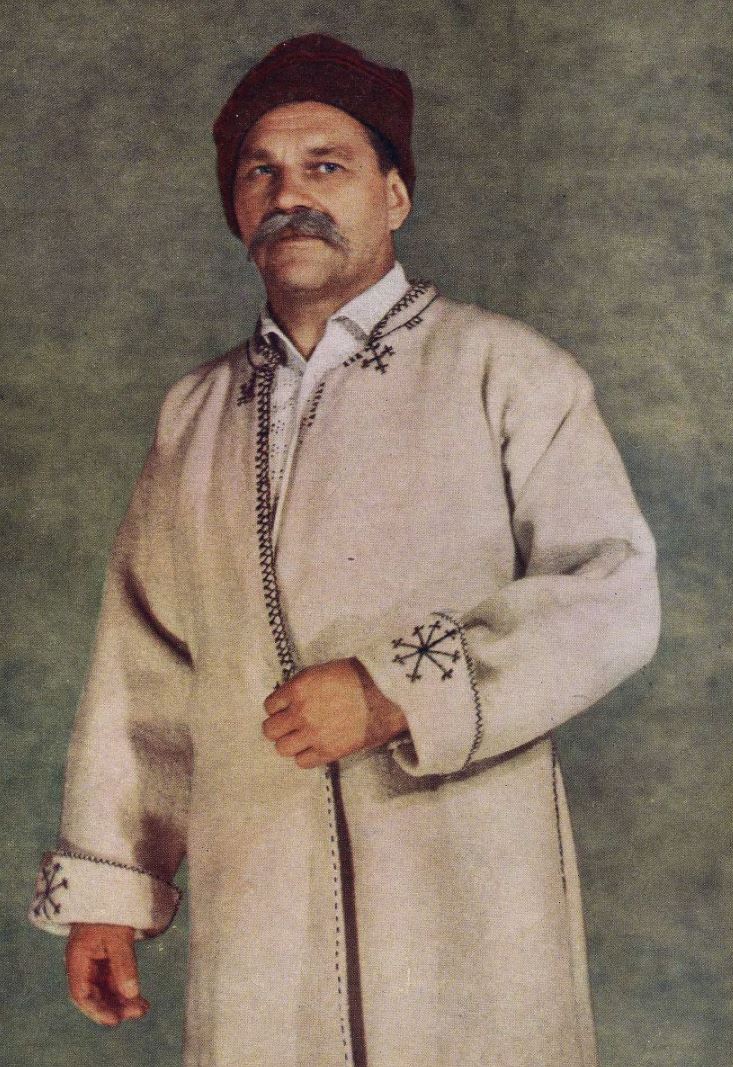
During the eighteenth and nineteenth centuries, white robes were the preferred attire for both genders. Men also donned gray robes. The sweaters were adorned with two raised motifs, modestly adorned with either red or black cords and intricate embroideries. The sleeves were finished with pleats bordered by cords and embroidery.
In the latter part of the nineteenth century, white embroidered headscarves gained popularity, followed by mass-produced floral ones. During weddings in the Kovel district, a bride's braids were ceremoniously cut off. The bride then revealed her cropped hair from beneath. A man's shirt, adorned with inset or arrowhead designs, was cinched with a belt featuring a buckle, where a folding knife and flint were attached.
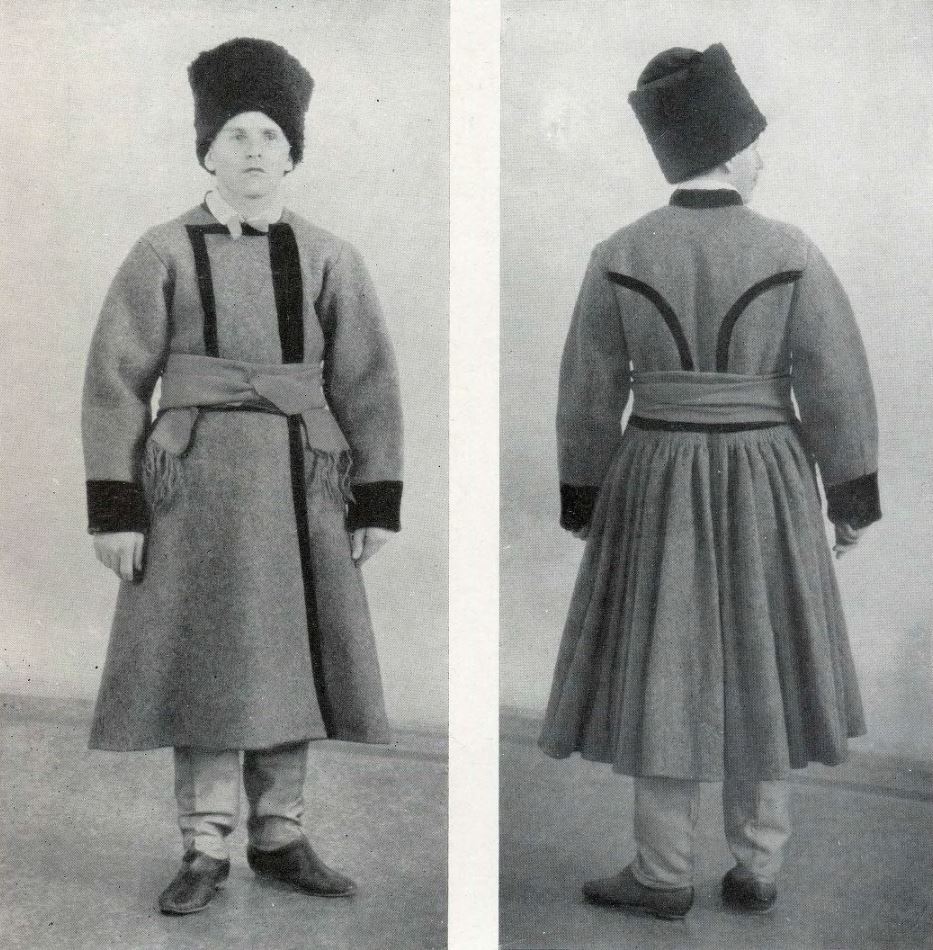
Trousers were moderately slim, crafted from rough fabric or woven with colorful stripes. The headwear included a felt yolomok or a gray cloth magerka with a square top, accented with red or blue trim. In the nineteenth century, lychakas were worn by both men and women. Boots were reserved for special occasions or occasionally during winter. By the 20th century, lychaky had vanished from daily wear.
The attire of southwestern Polissia (south of the Lutsk, Rivne, and Novohrad-Volynskyi regions) shares similarities with those of eastern Galicia and northern Podillia. Its distinct features are most evident in the upper body garments. This region saw the rise of sleeveless garments like snurovytsia and gor-set in women's clothing during the nineteenth century.
The sweaters' cut and design reflect the characteristic properties of this region. Gray sweaters are worn by men along with dark ones. Scarves for both men and women are sewn with cassocks instead of mustaches, similar to the dark scarves from the southern Kyiv region. The hems feature wedges (lapels) at the top, and women's garments are adorned with cords, embroidery, or colored fabric. Cords, primarily red but sometimes blue, along with colorful embroidery, embellish pockets, cassocks around the stan, hems, collar, sleeve plackets, and back seams. In the late nineteenth century, scrolls were stitched into a cut-off stan, with small gatherings at the back. Women also wear short "kusans" crafted from dark homemade cloth, decorated with colored embroidery and appliqués of red or blue fabric along the seams and hems.
Podillia has preserved ancient East Slavic traditions, such as animal ornamentation, in clothing and household items. Throughout its history, it has integrated West Slavic and potentially West Caucasian elements, creatively blending and incorporating them into its artistic traditions.