

The term "Holodomor" is a combination of the Ukrainian words "holod" meaning "hunger" and "moryty" meaning "to kill." It refers to the devastating famine that ravaged Ukraine in 1932-1933, resulting in the deaths of millions of Ukrainians. The Holodomor is widely recognized as an act of genocide committed by the Soviet regime under Joseph Stalin against the Ukrainian people.
The Holodomor was not a natural disaster, but rather a man-made catastrophe orchestrated by the Soviet government. Through a series of policies and actions, the Soviets deliberately and systematically deprived Ukrainians of food, leading to mass starvation on a scale unprecedented in modern history. This included the confiscation of all food supplies, the blockade of Ukraine to prevent people from fleeing, and the prohibition of any humanitarian aid from reaching the starving population.
The targeted destruction of the Ukrainian population during the early 1930s can be traced back to deliberate policies aimed at suppressing Ukrainian national identity. As noted by historians, beginning in 1933, there was a systematic settlement of individuals from other regions of the Soviet Union into areas where a significant portion of the Ukrainian populace had been exterminated. This strategy was closely aligned with the intentions expressed by communist officials who sought to extinguish any sense of Ukrainian nationalism.
A notable statement from a communist leader in the Kharkiv region in 1934 encapsulated this approach: "Famine in Ukraine was brought on to decrease the number of Ukrainians, replace the dead with people from other parts of the USSR, and thereby to kill the slightest thought of any Ukrainian independence." Such declarations highlight the calculated nature of the famine, which served as a means of population control and as a tool for eradicating aspirations for autonomy among Ukrainians.
How the Soviet Regime Orchestrated the Holodomor
A key factor that contributed to the famine was the imposition of unrealistic grain procurement quotas on Ukraine. In 1930, Stalin launched a renewed push for collectivization of agriculture across the Soviet Union. This involved the forced seizure of private farmland and livestock, and the compulsory organization of peasants into collective farms (kolkhozes) under state control. Collectivization was met with fierce resistance from Ukrainian peasants, who wished to maintain their independent farms and way of life.
To break this resistance, the Soviet leadership imposed ever-increasing grain procurement quotas on Ukraine, demanding that collective farms turn over a large and growing proportion of their harvests to the state. These quotas were set at unrealistic levels that could not be met, even in years of good harvests. For example, in 1932 the grain procurement quota for Ukraine was set at 7.7 million tons - nearly double the previous year's target.
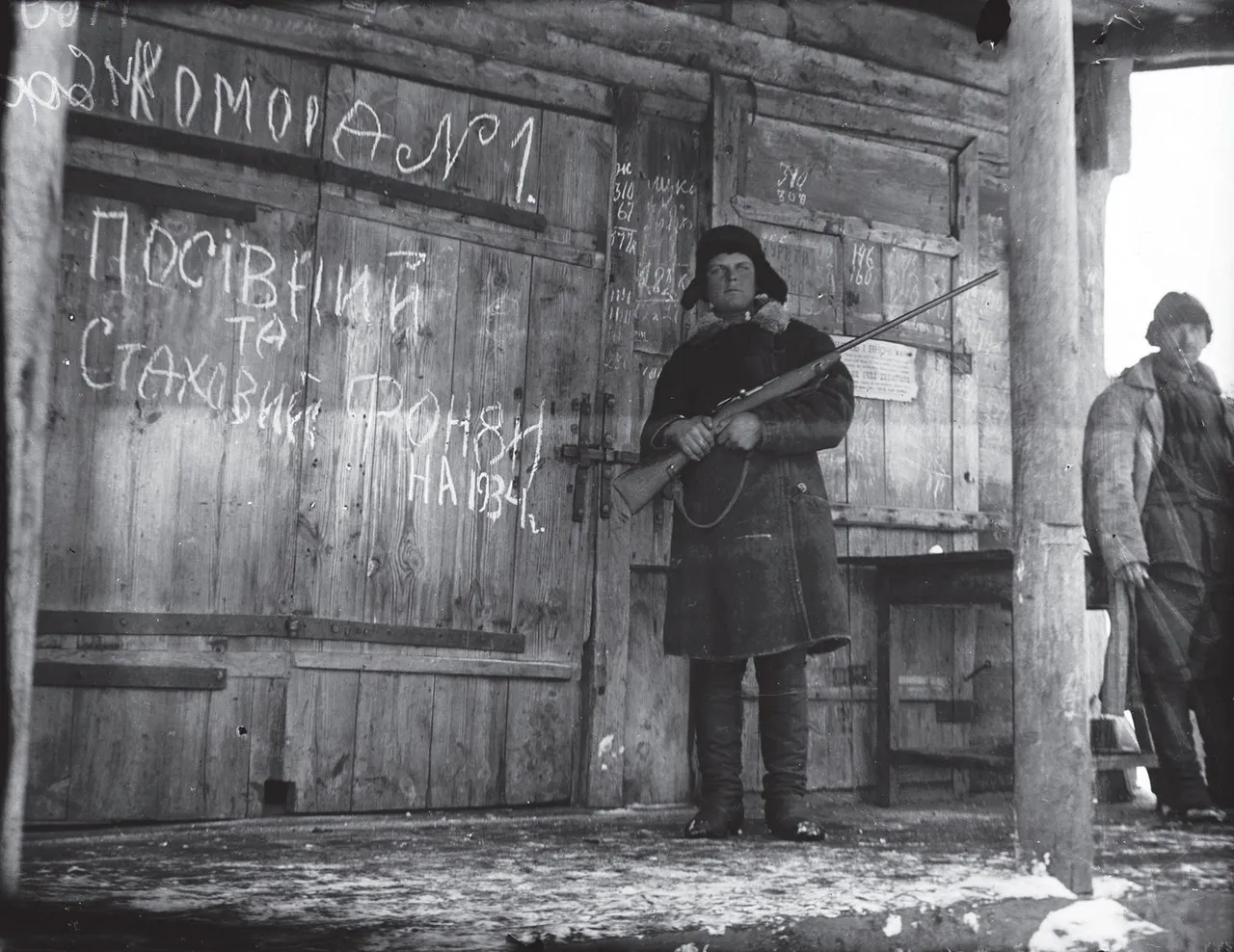
The consequences were disastrous. Collective farm managers were under immense pressure to meet these impossible targets, and they resorted to confiscating every last grain of wheat, rye, and other crops from the peasants. Villagers who failed to meet their quotas faced harsh punishments, including arrest, deportation to labor camps, or even execution. This left millions of Ukrainian peasants with no food reserves for the winter.
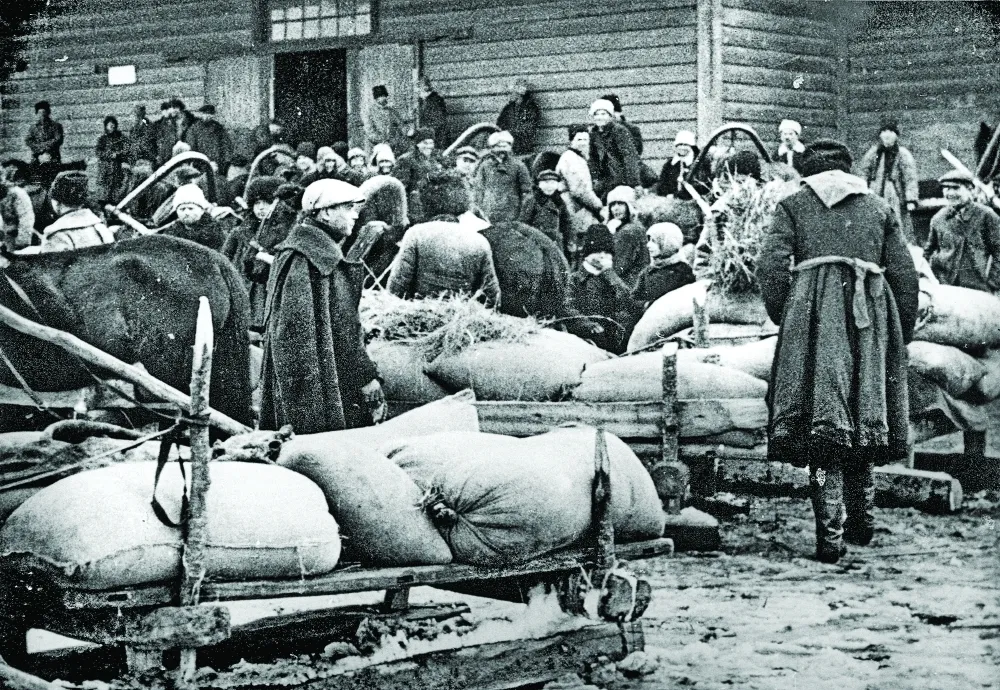
As the grain procurement quotas became increasingly unrealistic, the Soviet authorities escalated their campaign of food confiscation in the Ukrainian countryside. Special "brigades" of communist party activists, security police, and armed soldiers were dispatched to Ukrainian villages to search every home, barn, and storage pit for any hidden grain or other foodstuffs.
These "requisition brigades" ruthlessly stripped the peasants of all their crops, livestock, and even small food reserves like potatoes, vegetables, and preserves. Anything edible that could be seized was confiscated and sent to the state. Villagers who resisted or tried to conceal food were subject to arrest, beatings, and even execution on the spot.
Eyewitness accounts describe the horrific scenes as these brigades descended on Ukrainian communities. Vasyl Hryhorovych Baran, a survivor from the village of Velyka Mykhailivka, recalled:
"They came at night, about 10-15 of them. They searched everywhere - under the beds, in the storerooms, in the cellars. They took everything - the wheat, the rye, the millet, the potatoes. They even took the dried fruit and the pickles. We were left with nothing."
The scale of the food confiscation was staggering. In many villages, every edible item was seized, leaving the peasants with absolutely no means to feed themselves or their families. This deliberate destruction of the Ukrainian peasantry's food supply was a key factor that turned a difficult harvest year into a full-blown famine catastrophe.
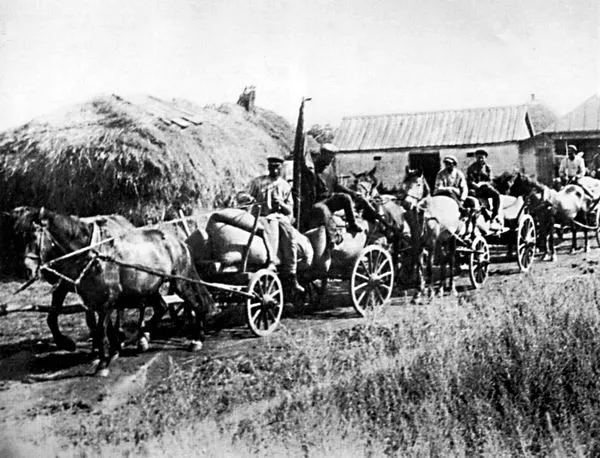
As the famine spiraled out of control in the Ukrainian countryside, the Soviet authorities took steps to prevent the starving peasants from fleeing their villages in search of food. Borders and checkpoints were established across Ukraine, with orders to block any attempted exodus from the famine-affected regions.
Special "food squads" of armed NKVD (secret police) troops were deployed to intercept and turn back any peasants trying to leave their villages. Those who managed to reach the borders were often stopped, searched, and sent back - sometimes at gunpoint. In many cases, villagers were simply shot on the spot if they tried to cross the cordons.
Testimony from survivors describes the horrific conditions at these border blockades. Mykola Bondarenko, from the village of Velyka Mykhailivka, recalled:
"The roads were full of people trying to get out - old people, women, children. But the NKVD troops would not let them pass. They had orders to shoot anyone who tried to cross the border. I saw them gun down whole families who were begging for mercy."
Hanna Dmytrivna Mykhailenko, told of how her own family was stopped and turned back when they tried to flee:
"We gathered what little food we had left and tried to get to the city of Kharkiv, where we heard there was still some bread. But the soldiers at the checkpoints wouldn't let us through. They searched us and took away even the tiny bit of food we had. We had to go back to the village, where we knew we would starve."
The blockade of the Ukrainian borders was a deliberate tactic to prevent news of the famine from spreading and to trap the peasants in the affected regions. It also ensured that the full scale of the catastrophe would be hidden from the outside world for as long as possible. Tragically, millions of Ukrainians perished in the Holodomor without any chance of escaping the deadly grip of the famine.
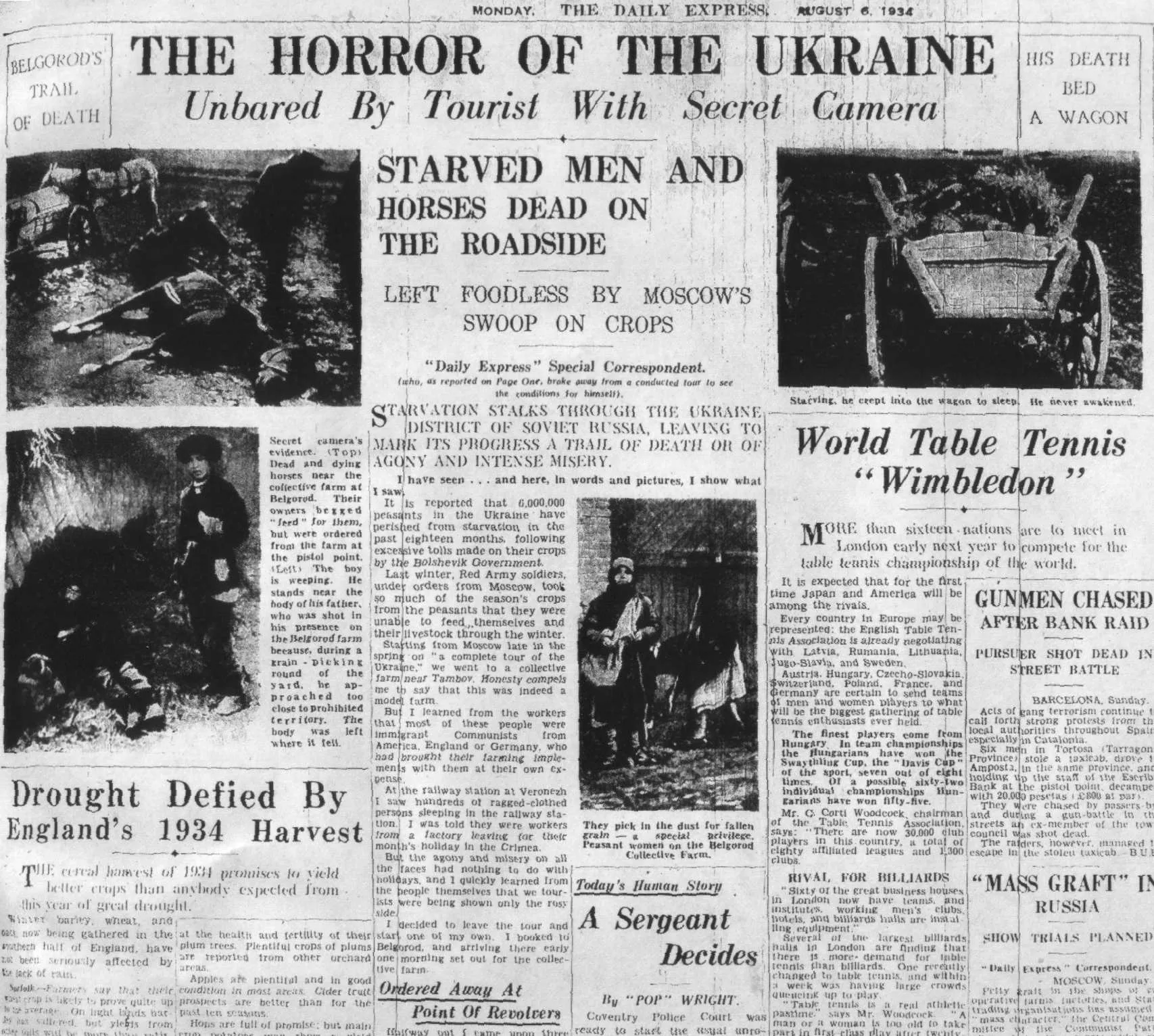
When reports of the famine began to emerge from Ukraine in 1932-1933, the Kremlin responded with a campaign of denial and disinformation. Soviet officials dismissed accounts of mass starvation as "anti-Soviet propaganda" and insisted that the grain procurement targets were being met. Foreign journalists who tried to investigate the situation were either expelled from the country or had their dispatches censored.
The Soviet government also rejected all offers of international humanitarian aid. When the American Relief Administration, which had provided famine relief in the Soviet Union during the 1920s, proposed sending food aid to Ukraine, the offer was flatly refused. Likewise, the Ukrainian government-in-exile in Warsaw appealed to the League of Nations for assistance, but this plea was ignored.
The denial of outside assistance was a calculated decision by the Soviet leadership. Accepting foreign aid would have been an admission of the regime's failure and the severity of the famine. It would also have undermined the Kremlin's narrative of a thriving socialist economy. As a result, millions of Ukrainians perished in the Holodomor without any hope of rescue or relief.
Demographic Evidence of Genocide
The mortality rates in Ukraine during this period were staggering. In some villages, up to 50% of the population perished. Historian Stanislav Kulchytsky estimates that 3.9 million Ukrainians died directly from the famine, with an additional 600,000 unborn children lost due to the catastrophic drop in birth rates. In contrast, the famine's impact was much less severe in other Soviet republics like Russia and Kazakhstan.
Eyewitness accounts paint a harrowing picture of the conditions in Ukraine. One survivor recalled: "People were dying like flies...We had to bury them in mass graves." Another described how "the bodies of the dead were lying in the streets, in the courtyards, in the houses. No one buried them - there was no one left to bury them." The scale of death was so immense that many villages were completely depopulated.
The Holodomor resulted in a catastrophic demographic disaster for Ukraine. According to the most authoritative estimates, Ukraine's population declined by over 3 million people during this period - a staggering 10% of the total population.
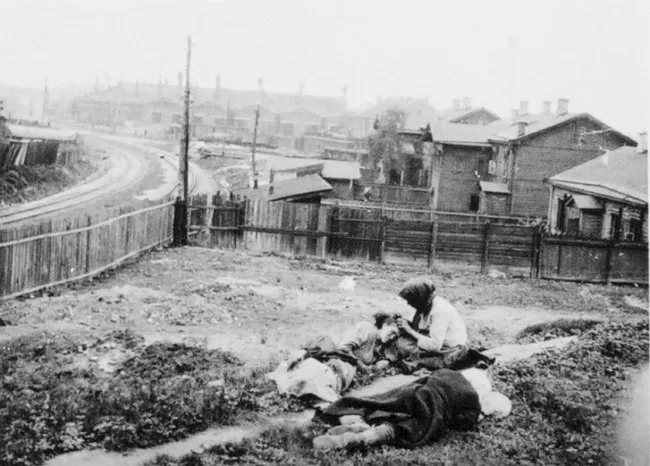
The population loss was especially severe in the Ukrainian countryside, which bore the brunt of the famine. Entire villages were wiped out, with survivors often abandoning their homes to search for food. The Soviet regime tried to cover up the scale of the tragedy, but eyewitness accounts and archival documents have exposed the horrific truth.
The trauma and disruption caused by the famine also had lasting psychological and social effects. Survivors described how the experience of watching loved ones starve to death left deep scars. Many lost the will or ability to have children, further depressing birth rates in the years after the Holodomor.
Denial and Cover-up by Soviet Authorities
Despite the devastating scale of the Holodomor, the Soviet regime under Joseph Stalin stubbornly refused to acknowledge the famine as it was unfolding. Authorities went to great lengths to conceal the truth and deny the existence of the catastrophic food shortages ravaging Ukraine.
When reports of mass starvation began to emerge from the Ukrainian countryside in 1932, the Kremlin dismissed them as "kulak sabotage" and "anti-Soviet agitation." Stalin himself angrily rejected any suggestion that a famine was occurring, insisting that the grain procurement plans were being fulfilled. In a letter to Communist Party officials, he railed against "all kinds of rumor-mongers" who were "exaggerating the difficulties" faced by the regime.
This denial was not merely rhetorical - the Soviet government actively suppressed and censored any information about the famine. Journalists and foreign observers who tried to report on the crisis were quickly expelled from the country. The Ukrainian Soviet Encyclopedia of 1932 made no mention of the famine, while internal OGPU (secret police) reports documenting the scale of the disaster were kept strictly confidential.
The Kremlin's efforts to conceal the Holodomor went far beyond simply denying its existence. Authorities implemented a ruthless campaign of censorship and information control to prevent news of the famine from reaching the outside world.
Soviet officials banned the use of the word "famine" in all official communications, instead using the euphemistic term "food difficulties". Reporters and researchers who attempted to investigate the crisis were immediately arrested or expelled. Foreign journalists like Gareth Jones, who exposed the scale of the famine in 1933, were denounced as liars and propagandists.

Within Ukraine itself, the regime cracked down on any attempts to document or discuss the Holodomor. Party officials were ordered to report only positive news about the state of agriculture, while NKVD (secret police) agents raided villages, confiscating private diaries and photographs that could serve as evidence of the famine. Even basic demographic data on mortality rates was falsified or destroyed to obscure the catastrophic loss of life.
This information blockade extended beyond Ukraine's borders. The Soviet government pressured foreign governments and international organizations to remain silent about the famine, threatening diplomatic and economic retaliation. When the Ukrainian diaspora tried to raise awareness of the Holodomor, Moscow denounced their efforts as "anti-Soviet propaganda."
Faced with growing international scrutiny, the Kremlin eventually acknowledged the existence of a famine in the USSR - but insisted that it was the result of natural causes, not deliberate state policy. This narrative of the Holodomor as an unfortunate but unavoidable natural disaster became the official Soviet position.
By framing the Holodomor as a natural calamity, the Soviet regime sought to absolve itself of culpability and undermine claims that it had deliberately targeted the Ukrainian nation. This narrative persisted for decades, with the Soviet government continuing to deny or downplay the scale and severity of the famine long after its occurrence.
Importance of recognizing the Holodomor as genocide
The Holodomor fits the legal definition of genocide as outlined in the 1948 United Nations Convention on the Prevention and Punishment of the Crime of Genocide. The convention defines genocide as "acts committed with intent to destroy, in whole or in part, a national, ethnical, racial or religious group." The Holodomor clearly meets this criteria, as the Soviet regime deliberately targeted the Ukrainian peasantry, a distinct national and ethnic group, with the intent of destroying them.
The Holodomor has been recognized as an act of genocide by numerous countries, including Ukraine, the United States, Canada, and several European nations. In 2006, the Ukrainian parliament passed a law officially recognizing the Holodomor as a genocide of the Ukrainian people.
The recognition of the Holodomor as an act of genocide is vital for several reasons. First and foremost, it is a matter of historical truth and justice for the millions of innocent victims. For decades, the Soviet regime suppressed and denied the Holodomor, seeking to erase it from collective memory. Acknowledging it as genocide restores the dignity of those who perished and ensures their suffering is not forgotten.
Beyond this, recognizing the Holodomor as genocide has profound implications for Ukraine's national identity and statehood. The systematic destruction of the Ukrainian peasantry was a deliberate attempt to undermine the country's social fabric and cultural foundations. This assault on Ukraine's very existence as a nation has had lasting consequences, shaping the country's tumultuous 20th century history.
The recognition of the Holodomor as genocide is not just about the past, but about the future. It is a crucial step in Ukraine's ongoing struggle for sovereignty, national identity, and reconciliation. By confronting this dark chapter of history, the international community can help Ukraine heal, empower its people, and ensure that such atrocities never happen again.