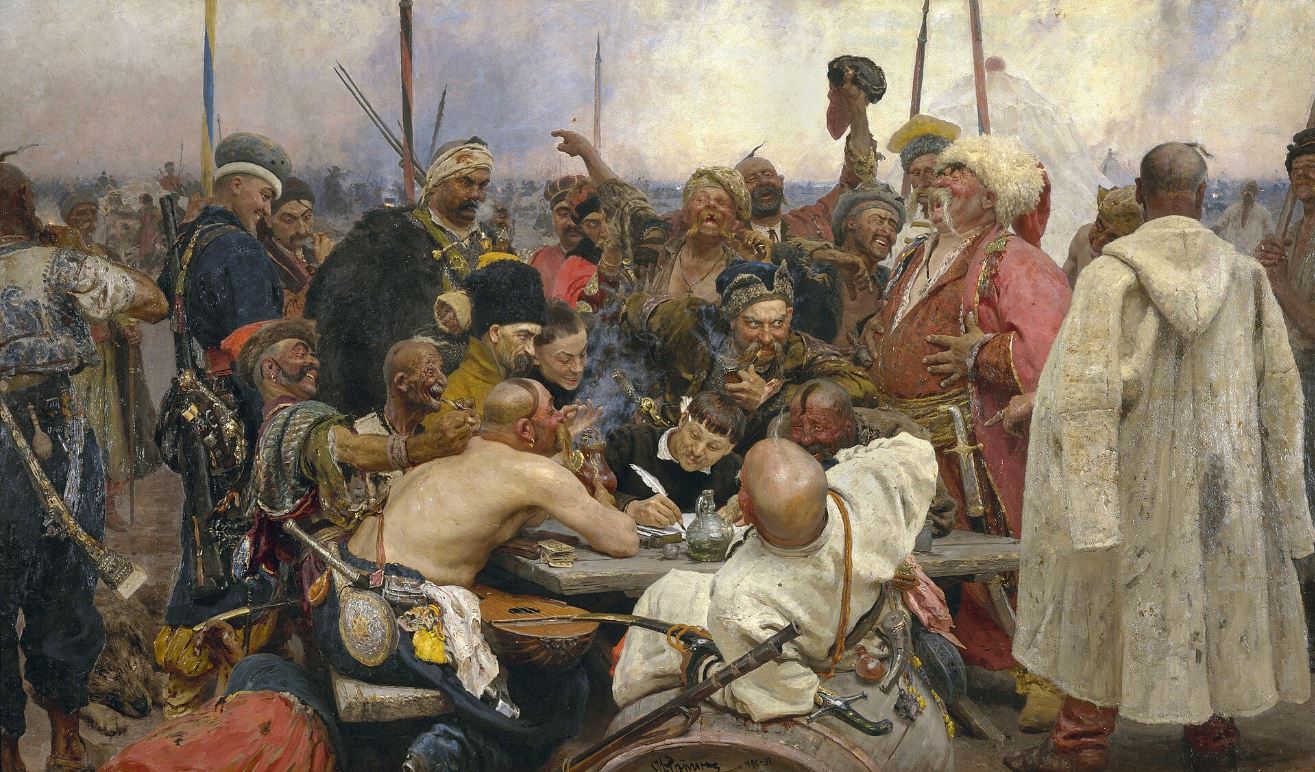


The early seventeenth century was a tumultuous period in the history of Eastern Europe, marked by a prolonged struggle for power and influence between the Polish-Lithuanian Commonwealth and the Muscovite Tsardom. This conflict, known as the Polish-Muscovite War, was fueled by competing claims to the Muscovite throne and the desire to expand territorial control in the region. Amidst this backdrop of political and military rivalry, the Zaporozhian Cossacks, a formidable warrior society based in the Ukrainian steppe, emerged as key players in the unfolding events.
The Cossacks, renowned for their military prowess, tactical acumen, and fierce independence, would play a pivotal role in the Polish-Muscovite conflict, lending their support to the Polish-Lithuanian cause and ultimately shaping the course of the war. At the forefront of this Cossack involvement was the legendary Hetman Petro Sahaidachny, a skilled military commander and statesman who would lead his people on a remarkable campaign into the heart of Muscovy.
Sahaidachny's March to Moscow
Petro Konashevych-Sahaidachny was a towering figure in the annals of Ukrainian history, a man whose exploits and strategic brilliance would leave an indelible mark on the events of the Polish-Muscovite War. Born in the late sixteenth century, Sahaidachny hailed from the Cossack heartland of the Ukrainian steppe, where he had honed his skills as a warrior and leader from a young age.
Ascending to the position of Hetman, the supreme commander of the Zaporozhian Host, Sahaidachny had already established himself as a formidable military leader, having led the Cossacks in numerous campaigns against the Ottoman Empire and the Crimean Khanate. His reputation for tactical acumen, bold decision-making, and unwavering courage had earned him the respect and admiration of his fellow Cossacks, as well as the attention of the Polish-Lithuanian authorities.
As the Polish-Muscovite conflict intensified, the Polish-Lithuanian Commonwealth sought to harness the power of the Zaporozhian Cossacks to bolster its efforts against the Muscovite Tsardom. Negotiations were initiated between Prince Władysław Vasa, the son of the Polish King Sigismund III, and the Cossack leadership, with the aim of securing Cossack participation in a planned campaign to seize the Muscovite throne.
Sahaidachny, recognizing the strategic importance of the conflict and the potential benefits for the Cossacks, agreed to mobilize his forces and join the Polish-Lithuanian army in its march on Moscow. The Cossack Hetman understood that this campaign presented an opportunity to not only expand Cossack influence and territory but also to weaken the power of their traditional rivals, the Muscovites.
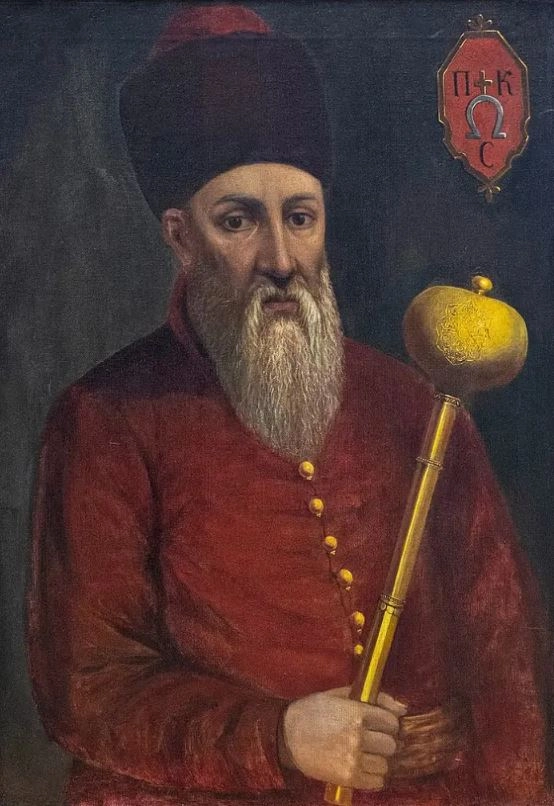
The Cossack contingent of some 20,000 men, comprising six regiments, set out from Ukraine in late June, marching along the Muravsky Shlyakh, a well-established trade route that connected the Crimean Peninsula to the heart of Muscovy. Sahaidachny's plan was to link up with Władysław's army near the city of Tushino, southwest of Moscow, and coordinate their assault on the Muscovite capital.
For Władysław, this news was like a lifeline: his 8,000-strong army had faltered in December of the previous year, and wintering in a foreign land had left his troops severely weakened. Some units, having not received their promised pay, had deserted. Władysław struggled to restore the fighting capacity of his army. The news of the Cossack reinforcements revived their spirits. A contemporary wrote, "No one expected it, and all were overjoyed as help came to Władysław's weary army as if from heaven." Encouraged, Władysław resumed his advance on Moscow. It's worth noting that since April 1617, about a thousand Ukrainian Cossacks had already been part of his army.
The involvement of the Cossacks in the military campaign proved catastrophic for Muscovy. Sahaidachny began his famous raid by destroying the key border town of Livny, which the Cossacks stormed on July 9, killing all the defenders. The Cossacks then launched successive attacks on other towns along their path, none of which were able to resist. The first to fall was Yelets, despite its strong walls and numerous garrison. Sahaidachny captured it through deception, leaving most of his forces hidden in the woods while advancing on the town with a smaller contingent. The overconfident local commanders assumed this was the entire attacking force and ordered their troops out of the walls. The Cossacks retreated slightly, and then the hidden forces launched a surprise attack, surrounding and crushing the Muscovites. The remaining defenders took refuge in a stockade, but the Cossacks breached it after a night of assaults. The attackers were determined, scaling the walls over their own dead. The defenders panicked and fled, and in the battle, the Cossacks reportedly killed 20,000 enemy soldiers. Many drowned in the river, and the reckless voivode Ivan Khrushchev was killed.
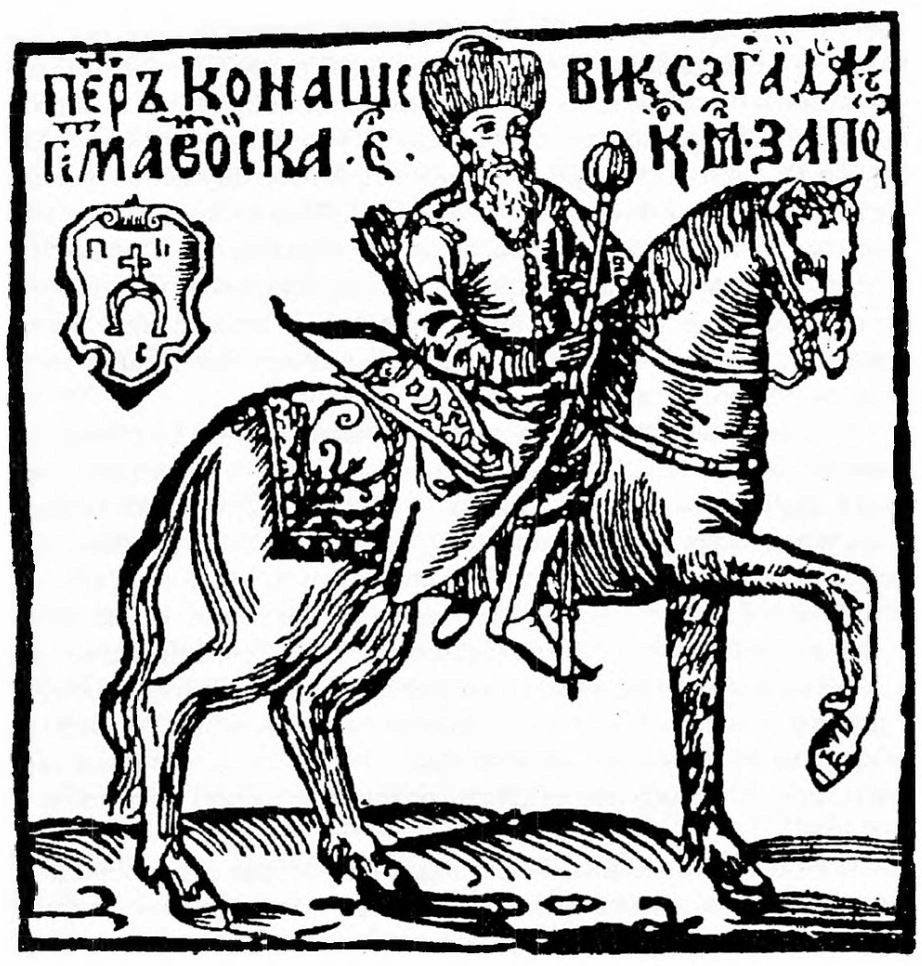
After capturing Yelets, the Cossacks continued their victorious campaign, destroying towns such as Yaroslavl, Dankov, Lebedyan, Skopin, Shatsk, Kasimov, Mikhailov, and Romanov. By doing so, Sahaidachny deprived the Muscovite Tsar of reinforcements from the Ryazan region, which had been a strategic goal of the raid. He explicitly stated this in a letter to Władysław: "We destroyed many towns, castles, and fortresses where Moscow had gathered forces, crushing them and preventing them from concentrating their forces."
The raid shocked Moscow. The Tsar dispatched Prince Dmitry Pozharsky, the hero of the second militia, to stop the Cossacks from crossing the Oka River. However, Pozharsky feigned illness to avoid facing Sahaidachny. Prince Grigory Volkonsky took command in his place, but he spread his forces too thin between Kolomna, Kashira, and Zaraysk, which the hetman exploited. On September 1, the Cossacks launched two assaults on Zaraysk. As the day progressed, Muscovite reinforcements arrived, but they were soon defeated by a small Cossack detachment. Overconfident from this minor victory, they left prisoners behind in Zaraysk and ventured out again, only to encounter a larger Cossack force. The Cossacks routed them and stormed the stockade, but the defenders managed to repel the attackers.
Undoubtedly, Sahaidachny would have continued besieging Zaraysk if not for a letter from the king, requesting his immediate march on Moscow. Without wasting time on further sieges, the hetman crossed the Oka and headed for the Muscovite capital.
The Assault on Moscow
On October 6, the Cossacks reached Moscow and set up camp near the Donskoy Monastery. Muscovite forces, led by Mikhail Buturlin, prepared to engage Władysław's army, but Sahaidachny struck first. There was no full-scale battle, but the Cossacks indulged in individual combat, known as "herce," and humiliated the Muscovites, losing only one man while the enemy lost a hundred. Sahaidachny even knocked Buturlin off his horse with a powerful blow from his mace, to the laughter of the witnessing Cossacks.
On October 8, the Cossacks proudly joined Władysław's camp at Tushino, where they were warmly welcomed. They presented the prince with traditional gifts - Tatar prisoners. Sahaidachny's intentions regarding Moscow were resolute, as evidenced by his earlier letter to Władysław: "May Almighty God grant success in this endeavor and help your royal highness to subdue this stubborn people and claim the crown."
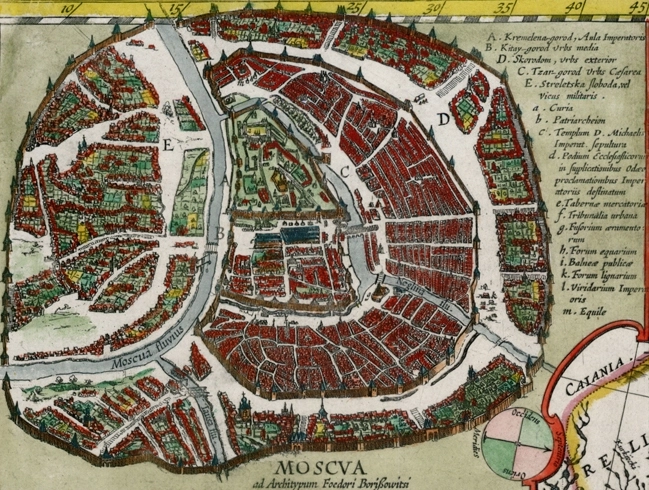
The plan of attack, devised by the Lithuanian hetman Jan Karol Chodkiewicz, called for a coordinated assault on the city, with the Polish and mercenary troops launching the main thrust against the Arbat and Tverskiye Gates, while the Cossacks were tasked with diversionary actions along the Moscow River and in the areas south of the city.
In the early hours of October 11th, 1618, the combined Polish-Lithuanian and Cossack forces launched their assault on Moscow. The attack began with a massive bombardment of the city's defenses, as the artillery of both armies pounded the walls and gates. Under the cover of darkness, the Polish and mercenary troops then surged forward, seeking to breach the Arbat and Tverskiye Gates.
The fighting was fierce and bloody, with the Muscovite defenders putting up a determined resistance. For several hours, the battle raged, with the attackers managing to gain a foothold within the city walls. However, the Cossack diversionary actions, while successful in drawing away some of the Muscovite forces, ultimately failed to provide the necessary support for the main assault. Faced with dwindling momentum and mounting casualties, the Polish-Lithuanian troops were forced to withdraw, their bid to capture Moscow thwarted.
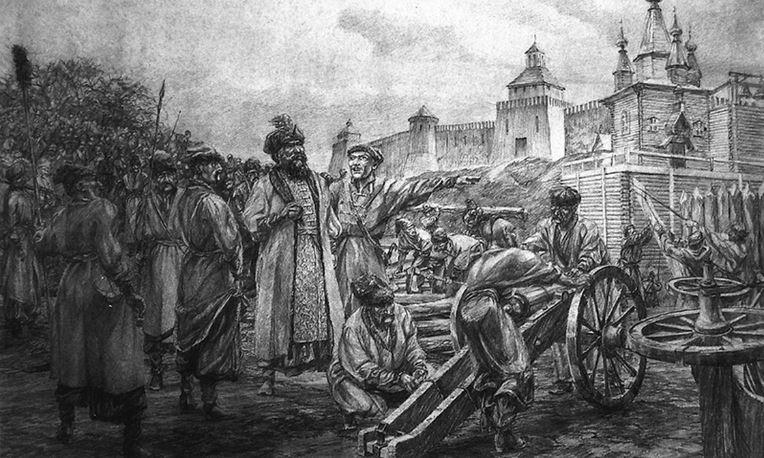
Though the assault on Moscow ultimately proved unsuccessful, the Cossacks played a crucial role in the overall campaign, both in the lead-up to the attack and during the battle itself. Sahaidachny's forces, with their unparalleled mobility and skill in irregular warfare, were instrumental in disrupting Muscovite defenses and sowing chaos across the region surrounding the capital.
The diversionary raids conducted by Doroshenko's detachment in the Ryazan and Meschera areas succeeded in drawing away significant Muscovite troops, preventing them from bolstering the city's garrison. Moreover, the Cossacks' own assault on the Moscow River crossing, while not directly supporting the main attack, nevertheless contributed to the overall pressure on the Muscovite forces.
The Aftermath
The Deulino Truce, signed in 1618, marked a major victory for the Polish-Lithuanian Commonwealth. Under the terms of the agreement, the Commonwealth gained control over the territories of Smolensk, Chernihiv, and Novhorod-Siverskyi, which had previously been under Muscovite rule. This territorial expansion was a sign of the success of the Polish-Cossack campaign, with the Cossacks' role in the conflict being widely recognized.
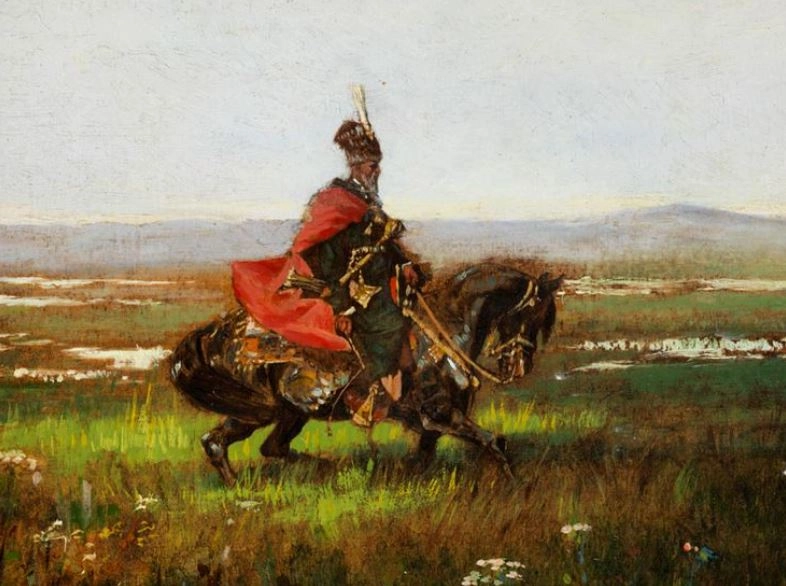
Sahaidachny's leadership, the Cossacks' military prowess, and their ability to strike deep into Muscovite territory all contributed to the Commonwealth's negotiating leverage. The Cossacks' exploits, including the capture of key cities and the daring crossing of the Oka River, had shaken the Muscovite authorities and forced them to the negotiating table.
In the aftermath of the Deulino Truce, Sahaidachny's legacy continued to grow. The Hetman's reputation as a skilled military commander and a shrewd diplomat only served to enhance the Zaporozhian Cossacks' standing in the region. The Cossacks' influence and autonomy continued to expand, solidifying their position as a formidable force in the complex geopolitical landscape of Eastern Europe.