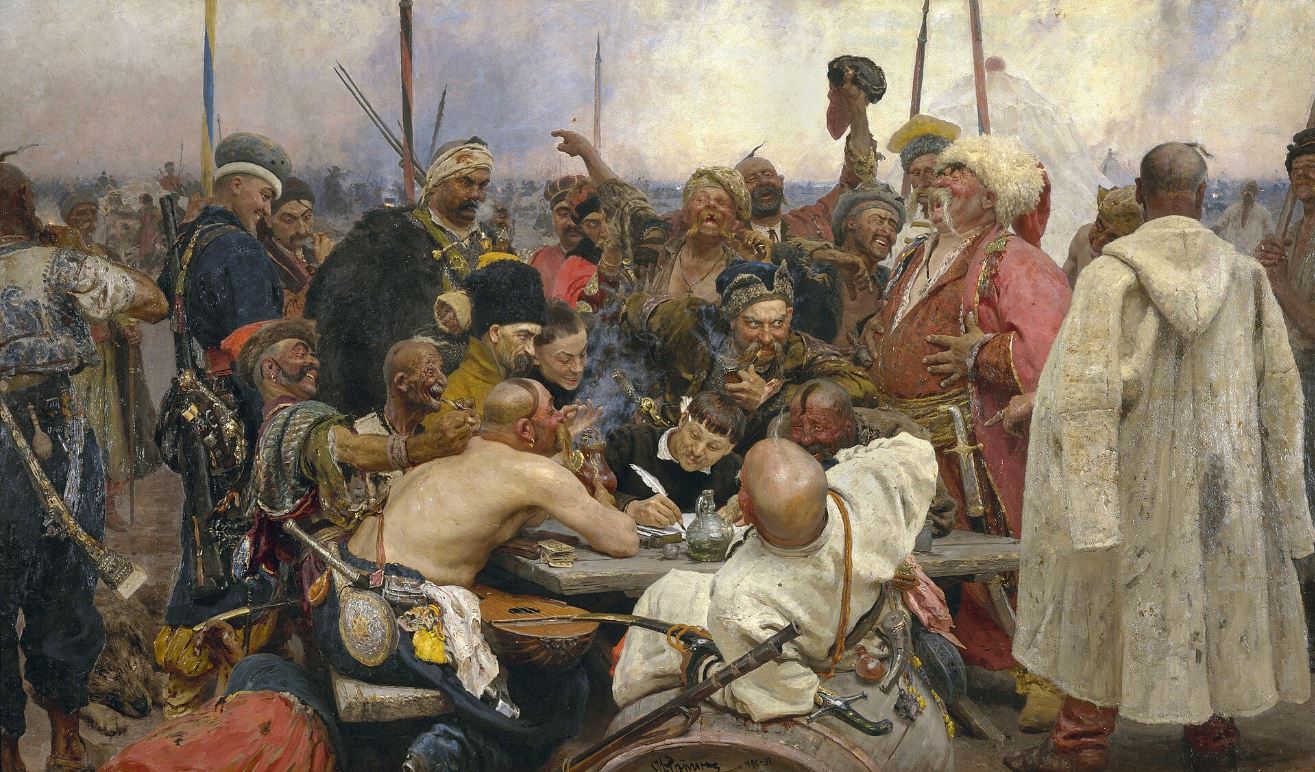



The Ukrainian people have always strived for independence and self-determination. This dream of its own statehood has lasted for centuries, even when Ukraine was under the rule of other states. The path to the declaration of Ukraine's independence on August 24, 1991, was long and difficult, full of struggle, sacrifice, and heroic achievements. It is this history of the struggle for freedom that is extremely important and instructive for understanding modern Ukraine.
The origins of the desire for independence date back to the times of Kievan Rus, when Ukraine was a powerful state stretching from the Black Sea to the Baltic Sea. However, Ukraine later found itself under the rule of Lithuania, Poland, the Muscovy, and later the Russian Empire. Throughout these centuries, the Ukrainian people never stopped fighting for their independence, as evidenced by the uprisings of Bohdan Khmelnytsky, Ivan Mazepa, Severin Nalyvaiko, and other prominent figures.
The proclamation of the Ukrainian People's Republic (UPR) in 1917 was an important step on the path to independence. At that time, the Ukrainian Central Rada, led by Mykhailo Hrushevsky, proclaimed Ukraine's independence. However, the young state was unable to resist the onslaught of Bolshevik Russia, and in 1920 Ukraine was occupied by the Red Army and incorporated into the Soviet Union.
During the Soviet period, the Ukrainian people continued to fight for freedom. In particular, the 1930s saw mass repression of the Ukrainian intelligentsia and peasantry, known as the “Executed Renaissance.” During World War II, Ukrainians actively fought against the Nazi occupation, creating a powerful resistance movement led by the Ukrainian Insurgent Army (UPA). After the war, the struggle for independence did not subside, as evidenced by the dissident movement of the 1960s and 1980s and the Revolution on Granite in 1990.
The declaration of Ukraine's independence on August 24, 1991, was the culmination of this centuries-long struggle. It became possible thanks to the efforts of many generations of Ukrainians who sacrificed themselves for the freedom of their homeland. This event was a turning point in the history of Ukraine, opening a new era of development of Ukrainian statehood.
Preconditions for the Declaration of Independence
The preconditions for Ukraine's declaration of independence on August 24, 1991, date back to the late 1980s, when perestroika (meaning "restructuring") began in the Soviet Union, initiated by Mikhail Gorbachev, General Secretary of the CPSU Central Committee. This policy aimed to reform the stagnant Soviet economy and political system. Alongside this, glasnost (meaning "openness") was introduced, promoting greater transparency and freedom of expression. These reforms enabled the Ukrainian people to openly express their aspirations for independence.
The People's Movement of Ukraine for Perestroika (Narodnyi Rukh Ukrainy) played a pivotal role in the journey towards Ukraine's independence. Formed in September 1989, the Movement brought together a diverse coalition of Ukrainian intellectuals, students, and workers who were united in their desire for democratic transformation and separation from the crumbling Soviet Union. Led by prominent figures like Ivan Drach and Vyacheslav Chornovil, the Rukh quickly emerged as the driving force behind the national liberation movement in Ukraine.
The Movement's impact was felt across the country, as it organized mass rallies, strikes, and other forms of civil disobedience to challenge the Communist Party's grip on power. Through its tireless advocacy and grassroots mobilization, the Rukh succeeded in placing the issue of Ukrainian sovereignty at the forefront of the political agenda.
The watershed moment came on July 16, 1990, when the Verkhovna Rada (Supreme Council) of the Ukrainian Soviet Socialist Republic adopted the Declaration of State Sovereignty of Ukraine. This historic document proclaimed the supremacy, independence, and indivisibility of Ukrainian state power within its territory, as well as the Republic's right to independent foreign relations. The Declaration effectively laid the legal and political groundwork for Ukraine's path to full independence.
The August coup and the declaration of independence
The August 1991 putsch, organized by the conservative wing of the Communist Party of the Soviet Union, became the catalyst for the declaration of Ukraine's independence. On August 19, 1991, in Moscow, a group of Soviet officials, including Soviet Vice President Gennady Yanayev, Soviet Prime Minister Valentin Pavlov, Soviet Defense Minister Dmitry Yazov, and Soviet KGB Chairman Vladimir Kryuchkov, attempted a coup d'état to remove Mikhail Gorbachev from the presidency of the USSR and reverse democratic reforms.

Ukraine's reaction to these events was immediate. The Verkhovna Rada of the Ukrainian SSR immediately condemned the actions of the putschists and declared its non-recognition of their authority. The Chairman of the Verkhovna Rada, Leonid Kravchuk, called on Ukrainians to remain calm and organized, emphasizing that Ukraine would defend its sovereignty.
Mass protests against the coup broke out across Ukraine. Protesters took to the streets, blocking government buildings and military units. Ukrainians demonstrated their determination to fight for the independence of their country.
It was in these dramatic circumstances that the Verkhovna Rada of the Ukrainian SSR adopted the Act of Independence of Ukraine on August 24, 1991. This historic document proclaimed Ukraine an independent, democratic state and declared Ukraine's separation from the USSR.
The adoption of the Act was the culmination of the Ukrainian people's long struggle for freedom. It opened a new page in the history of Ukraine, marking the restoration of its statehood after 70 years of being part of the Soviet Union.
The Declaration of Independence was made possible by the decisive actions of Ukrainian leaders, led by Leonid Kravchuk. It was he who, as Chairman of the Verkhovna Rada, played a key role in this process. Kravchuk was clearly aware of the historical importance of the moment and the need to take advantage of the favorable situation caused by the coup in Moscow.
On December 1, 1991, a nationwide referendum was held in Ukraine to confirm the Act of Declaration of Independence adopted by the Verkhovna Rada on August 24, 1991. This referendum was necessary to neutralize the political speculations of opponents of Ukrainian independence, especially in the eastern and southern regions of the republic, who claimed that the people allegedly did not support the Act of Independence.
The referendum question was clear and straightforward: "Do you support the Act of Declaration of Independence of Ukraine?" Of the 37,885,600 citizens of Ukraine who were included in the secret ballot lists, 31,891,742 (84.18%) took part in the voting. Of these, 28,804,071 voters (90.32%) answered the question positively.
The referendum results demonstrated unequivocally that the Ukrainian people wanted an independent Ukrainian state. In particular, in Crimea, 54.19% of citizens confirmed the Act of Independence, in Sevastopol - 57.07%; in the Donetsk, Luhansk, Odesa, and Kharkiv regions, over 80% of voters confirmed the Act of Independence; in Ivano-Frankivsk, Lviv, Ternopil, Volyn, Rivne, Zhytomyr, Kyiv, Khmilnytskyi, Cherkasy, and Vinnytsia regions, over 95% voted for independence; in the rest of the regions, over 90% of citizens voted for independence.
Celebrating Independence Day
Immediately after the declaration of independence on August 24, 1991, mass celebrations began in Ukraine. People took to the streets to celebrate this historic achievement. In Kyiv, Lviv, Odesa, Kharkiv, and other cities, thousands of people held rallies and demonstrations, where patriotic slogans were shouted and national songs were sung.
The celebration in the capital of Ukraine, Kyiv, was particularly emotional. Hundreds of thousands of people gathered on the Independence Square to cheer the declaration of independence. Blue and yellow flags were raised, applause and chants were heard. It was a true national holiday that symbolized the triumph of the long struggle for freedom.
The Independence Day celebrations have become a tradition that unites Ukrainians every year. The celebrations involving the President of Ukraine, the Verkhovna Rada, the government and other high-ranking officials take place in Kyiv, where military parades, concerts, festivals and fireworks take place.
However, Independence Day celebrations are not limited to the capital. All regions of Ukraine are hosting various events to honor this important date. Cities host ceremonies, laying flowers at monuments to prominent Ukrainian figures, concerts and folk festivals.
Celebrating Ukraine's Independence Day is an important unifying factor for the entire country. It symbolizes national dignity, the will to freedom and the desire to build an independent, democratic state. Every year, these celebrations emphasize the importance of August 24, 1991 for the history of Ukraine and its people.

As Ukraine commemorates its Independence Day amidst the ongoing challenges posed by a full-scale Russian invasion, the significance of this day transcends mere celebration. It serves as a powerful reminder of the resilience and tenacity of the Ukrainian spirit. The unwavering commitment to freedom and democratic values has galvanized the nation, uniting citizens across regions and backgrounds in a shared purpose.
Each flag waved, each anthem sung, and each story told reinforces the belief that Ukraine shall prevail. The collective strength of its people, rooted in a profound love for their homeland and its ideals, assures that no external force can extinguish the flame of independence. As Ukrainians stand firm against adversity, they embody the very essence of courage and hope, inspiring not only their own nation but also the world to stand in solidarity for freedom.