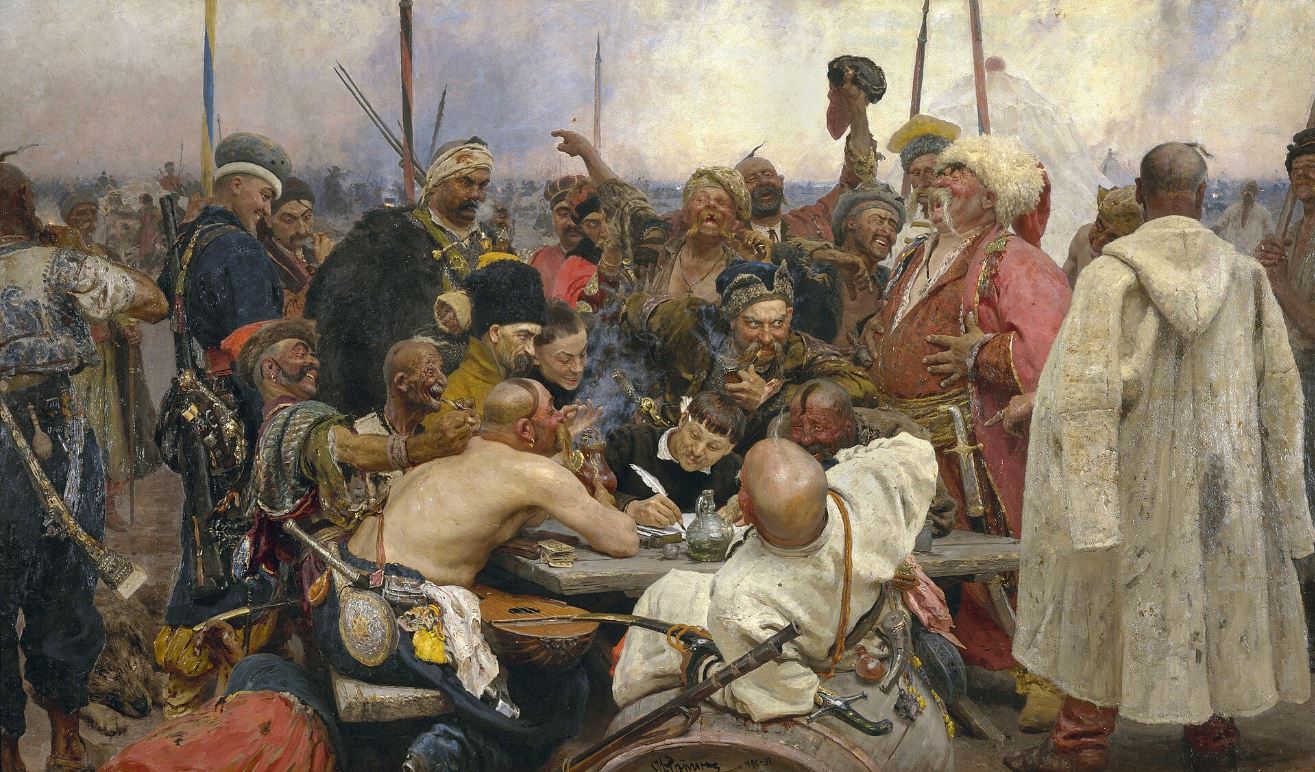

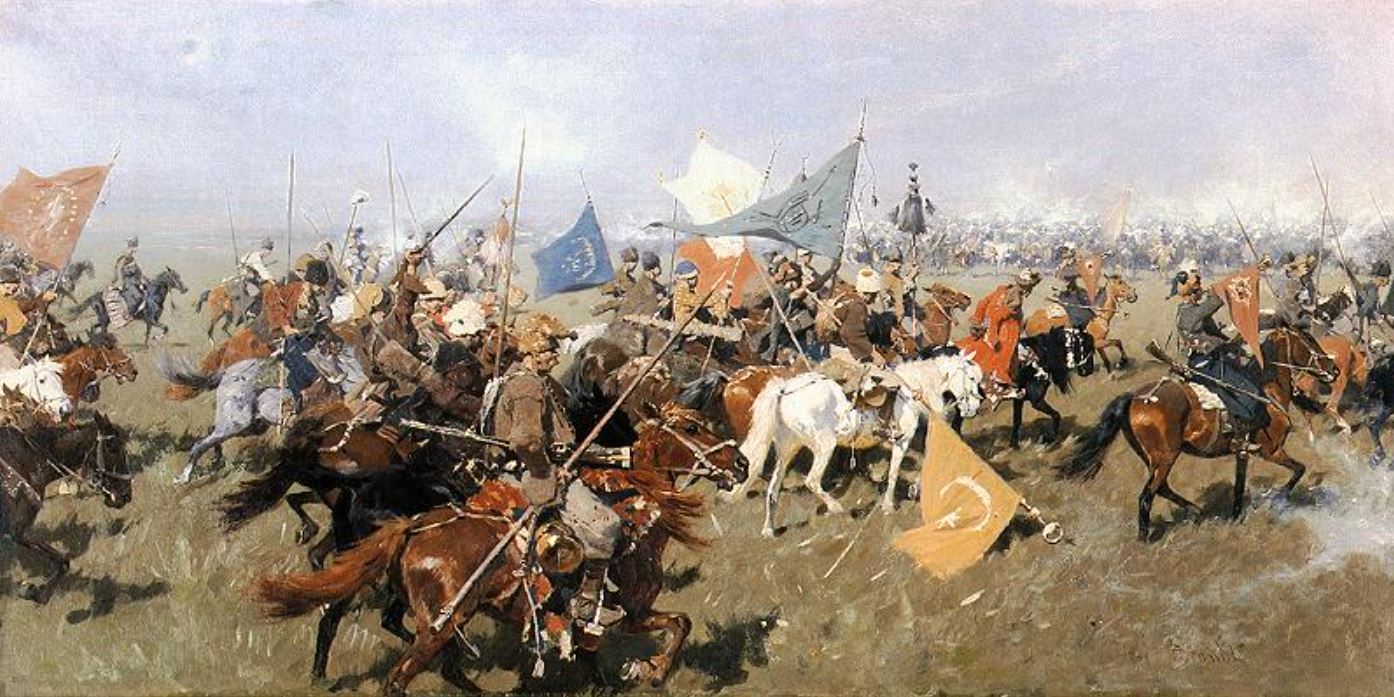
The Ukrainian Cossacks, a legendary warrior class that emerged in the 15th-16th centuries, played a pivotal role in the long-standing conflicts between Ukraine, the Tatar Khanate, and the Ottoman Turkish Empire. This article delves into the captivating history of the Cossacks' military prowess, their tactics, and their unwavering defense of Ukrainian lands against the relentless Tatar and Turkish invasions
The Ukrainian lands, known as Rus' or Little Rus' (in contrast to Muscovite Rus'), stretched from the Carpathian Mountains to the Azov and Black Seas. This vast territory, rich in natural resources and strategic importance, became a battleground for various powers vying for control. The Cossacks, with their unparalleled military skills and fierce independence, emerged as the primary defenders of Ukrainian sovereignty against the encroaching Tatar and Turkish forces.
The Cossack Raids: Striking Swiftly from the Shadows
The Cossacks' primary mode of attack was the sudden, lightning-fast raid on enemy settlements and encampments. Employing their swift and nimble "chaikas" (boats), they could rapidly appear in unexpected locations, often under the cover of darkness. The Cossacks would stealthily approach their targets, then launch a coordinated, multi-pronged assault, striking from all sides.
These surprise attacks were highly effective in sowing panic and demoralization among the enemy. Caught off guard, the opposition was often unable to mount an effective defense, allowing the Cossacks to seize valuable plunder and captives. The speed and audacity of these raids were a hallmark of the Cossack's martial prowess.
In one such operation, a Cossack force of 150 "chaikas" with 10 oarsmen and 50 well-armed men each, approached the very walls of Constantinople (modern-day Istanbul). Appearing suddenly, they attacked Ottoman settlements along the coast, inflicting significant damage before withdrawing back to the Black Sea, laden with spoils.
The Cossacks' mastery of riverine warfare was a key enabler of these lightning raids. Their shallow-draft "chaikas" allowed them to navigate the intricate network of rivers and estuaries that dotted the region, granting them access to targets that were otherwise difficult to reach. This mobility, combined with their intimate knowledge of the local waterways, gave the Cossacks a distinct advantage in conducting surprise attacks.

In addition to their naval operations, the Cossacks also conducted daring raids by land. Exploiting their familiarity with the steppe terrain, they would stealthily approach enemy encampments and settlements, then launch devastating assaults. These ground-based raids often targeted caravans, supply lines, and outlying outposts, disrupting the enemy's logistics and communications.
The Cossacks' ability to strike swiftly and vanish back into the landscape was a source of constant frustration for their opponents. The Tatars and Ottomans struggled to effectively counter these lightning raids, as the Cossacks' mobility and intimate knowledge of the terrain allowed them to evade pursuit and disappear into the vast expanse of the steppe.
Ambushes and Traps: Leveraging the Terrain
Alongside their lightning raids, the Cossacks were masters of ambushes and the skillful use of traps. They meticulously studied the terrain, seeking out advantageous positions where they could conceal their forces and spring unexpected attacks on unwary enemies.
The Cossacks' intimate familiarity with the local geography was a key asset in this regard. They identified chokepoints, river crossings, and ridge passes as prime locations for ambushes, where they could channel the enemy into killing zones and unleash devastating assaults.
One particularly infamous Cossack ambush occurred at the Tsarhorod (Constantinople) Trail, a major trade route that connected the Crimean Peninsula to the Ottoman capital. The Cossacks, having carefully observed the terrain, set an elaborate trap along a narrow gorge. As a large Ottoman caravan passed through the choke point, the Cossacks sprung their ambush, raining down musket and arrow fire from concealed positions on the surrounding heights. The trapped caravan was swiftly overwhelmed, with the Cossacks emerging victorious and laden with plunder.
The Cossacks also employed a variety of ingenious traps to further enhance the effectiveness of their ambushes. They might, for example, camouflage pits or trenches along likely avenues of approach, or rig hidden tripwires to trigger volleys of arrows or musket fire. These traps, combined with the Cossacks' mastery of terrain, made their ambushes particularly devastating.
In open battle, the Cossacks would sometimes employ the tactic of the "feigned retreat," where they would deliberately fall back, only to suddenly turn and strike the pursuing enemy. This maneuver, executed with the precision of their light cavalry, often caught opponents off guard and allowed the Cossacks to inflict heavy casualties.

The Cossacks' ability to leverage the terrain, set effective ambushes, and employ cunning tactical maneuvers was a significant factor in their success against numerically superior foes. Their intimate knowledge of the local geography, combined with their adaptability and innovative spirit, made them formidable adversaries on the battlefield.
Firepower and Maneuverability: The Cossack Combined Arms Approach
The Cossacks' martial prowess was further enhanced by their skillful integration of firearms and edged weapons, coupled with the maneuverability of their light cavalry. This combined arms approach allowed them to overwhelm their opponents through a potent blend of firepower and mobility.
The Cossack arsenal was dominated by the sabre and the spear, which they wielded with exceptional skill. They were masters of the sabre, executing complex cutting and thrusting techniques that made them deadly in close-quarters combat. The spear, on the other hand, was utilized both in mounted charges and as a formidable infantry weapon.
Alongside their melee weapons, the Cossacks also made extensive use of firearms, including muskets, pistols, and even field artillery. They demonstrated a remarkable ability to coordinate the firepower of these weapons with the maneuverability of their light cavalry. Cossack horsemen would swiftly maneuver into position, unleashing devastating volleys of musket and pistol fire before charging with their sabres and spears.

This combined arms approach allowed the Cossacks to overwhelm their opponents through a combination of firepower, shock action, and mobility. When facing heavily armored and disciplined infantry, the Cossacks would soften them up with a barrage of musket and cannon fire before launching their cavalry charges. Against more mobile foes, such as the Tatar light cavalry, the Cossacks could rapidly shift the direction of their attacks, exploiting gaps in the enemy's formation.
The Cossacks' mastery of firearms was particularly noteworthy, as they were among the first in the region to adopt and effectively utilize these weapons. They developed specialized techniques for firing from horseback, allowing them to maintain their mobility while delivering devastating ranged attacks. The Cossacks also demonstrated a keen understanding of artillery, employing field guns to support their ground and naval operations.
This integration of firepower and maneuverability was a hallmark of the Cossack's martial prowess. By seamlessly blending these complementary capabilities, they were able to overwhelm their opponents, who often struggled to counter the Cossacks' tactical flexibility and combined arms approach.
Fortified Strongholds: The Impregnable Zaporozhian Sich
While the Cossacks were renowned for their mobility and offensive prowess, they also demonstrated a keen understanding of the importance of defensive positions. They constructed fortified camps and strongholds, leveraging the natural terrain to bolster their defenses against enemy assaults.
The most famous of these Cossack strongholds was the Zaporozhian Sich, situated on the island of Khortytsia in the Dnieper River. This fortified settlement, with its wooden palisades, earthen ramparts, and natural barriers, was considered all but impregnable. The Sich's strategic location, surrounded by the Dnipro's intricate network of channels and islands, made it exceptionally difficult for attackers to approach and assault.
The Cossacks meticulously selected and fortified their defensive positions, taking advantage of natural features such as rivers, marshes, and dense forests to enhance the Sich's security. They constructed a series of interconnected camps and strongholds, each providing mutual support and a fallback position in the event of an attack.
From these fortified strongholds, the Cossacks could successfully repel the assaults of their numerically superior opponents. The Tatars and Ottomans, in particular, struggled to overcome the Sich's formidable defenses, often resorting to lengthy sieges that ultimately proved futile.
The Cossacks' ability to choose and fortify advantageous defensive positions was a critical component of their overall military strategy. It allowed them to weather the onslaught of their enemies, while also serving as a secure base from which to launch their own raids and attacks. The Zaporozhian Sich, in particular, became a symbol of Cossack resistance and resilience, standing as a testament to their martial prowess and strategic acumen.

The Cossacks of Ukraine were renowned for their daring and effective methods of warfare, which allowed them to overcome their formidable adversaries, the Tatars and Ottomans. Their tactics and strategies were forged in the crucible of the steppe, where they adapted to the unique challenges of the terrain and the mobility of their opponents.
The martial exploits of the Cossack warriors have left an indelible mark on the history of Ukraine and the broader region. Their tactical ingenuity, strategic thinking, and sheer bravery continue to inspire admiration and awe, serving as a testament to the indomitable spirit of the Ukrainian people.